
Sony Group has featured Synecoculture™ and Augmented Ecosystems in its latest overview of biodiversity initiatives, updated on September 18, 2026.
Under the section “Augmenting Ecosystems and Raising Awareness through Synecoculture™,” Sony positions Synecoculture as one of its approaches to the restoration, creation, and conservation of biodiversity. The report highlights its growing implementation across research, business, education, and employee engagement.
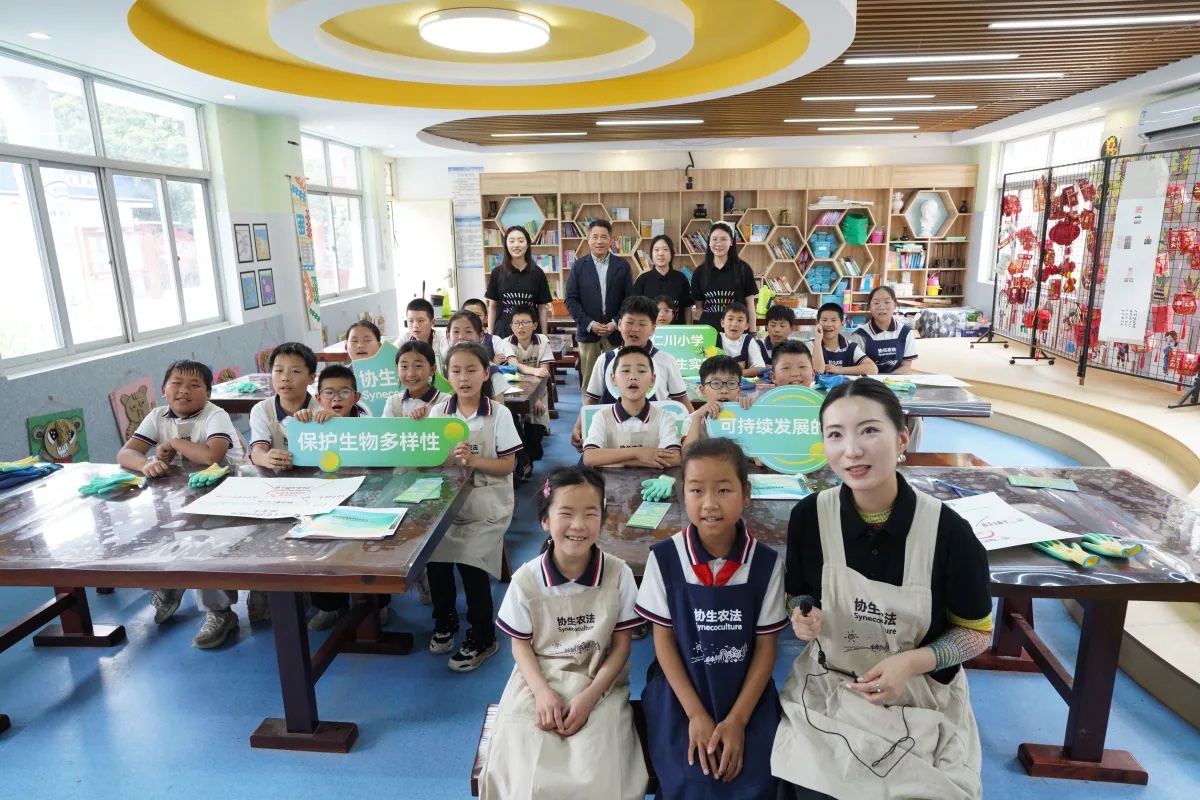
In China, Synecoculture gardens were established at elementary schools in Zhejiang and Yunnan provinces in 2025 to support biodiversity education. Vegetables harvested from the Suzhou Farm, the world’s first Synecoculture-certified farm, have also been supplied to Sony’s Shanghai employee cafeteria: more than 575 kg of produce comprising over 30 vegetable varieties were provided. The Synecoculture initiatives in China also received the ESG Outstanding Project Award at Bloomberg Green Gold 2026.
In Japan, Sony/Taiyo has developed a Synecoculture farm with support from SynecO since fiscal year 2022. More than 210 plant species have been introduced, with harvested vegetables served in the employee cafeteria. Activities were further expanded in fiscal year 2025 to include employee participation in seed sowing, herb harvesting, and herbal tea tasting.
The report also introduces Synecoculture and Augmented Ecosystems as enabling technologies, extending their application beyond agriculture to ecosystem restoration and urban green-space design. It refers to ongoing initiatives in Senegal and Cameroon, forest regeneration in West Sumatra, and the Green Pool augmented ecosystem at Azabudai Hills in Tokyo.
These developments illustrate the transition of Synecoculture from scientific research toward broader social implementation—connecting biodiversity enhancement with food production, education, business activities, and the creation of augmented ecosystems.
More information:
Sony Group – Biodiversity Initiatives