
Synecoculture Featured in Sony’s Biodiversity Initiatives

Sony Group has featured Synecoculture™ and Augmented Ecosystems in its latest overview of biodiversity initiatives, updated on September 18, 2026.

Under the section “Augmenting Ecosystems and Raising Awareness through Synecoculture™,” Sony positions Synecoculture as one of its approaches to the restoration, creation, and conservation of biodiversity. The report highlights its growing implementation across research, business, education, and employee engagement.

In China, Synecoculture gardens were established at elementary schools in Zhejiang and Yunnan provinces in 2025 to support biodiversity education. Vegetables harvested from the Suzhou Farm, the world’s first Synecoculture-certified farm, have also been supplied to Sony’s Shanghai employee cafeteria: more than 575 kg of produce comprising over 30 vegetable varieties were provided. The Synecoculture initiatives in China also received the ESG Outstanding Project Award at Bloomberg Green Gold 2026.
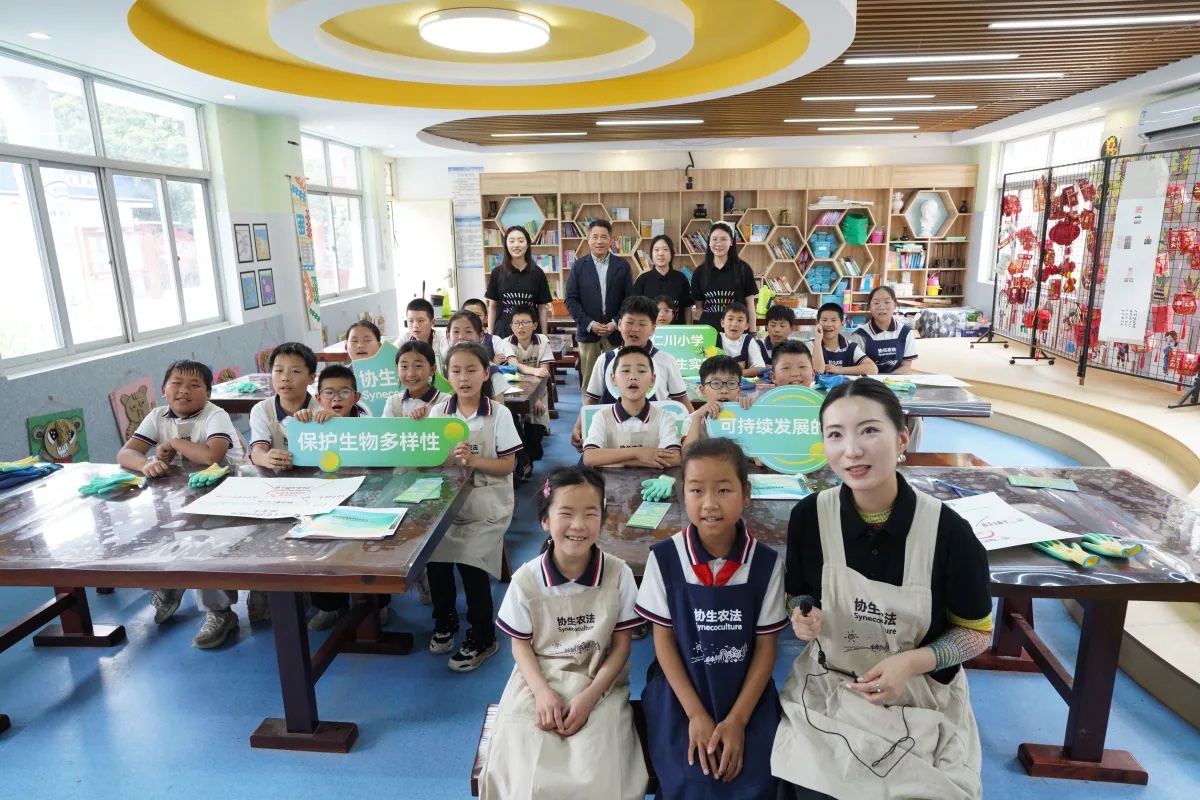
Synecoculture workshop at an elementary school

In Japan, Sony/Taiyo has developed a Synecoculture farm with support from SynecO since fiscal year 2022. More than 210 plant species have been introduced, with harvested vegetables served in the employee cafeteria. Activities were further expanded in fiscal year 2025 to include employee participation in seed sowing, herb harvesting, and herbal tea tasting.

The report also introduces Synecoculture and Augmented Ecosystems as enabling technologies, extending their application beyond agriculture to ecosystem restoration and urban green-space design. It refers to ongoing initiatives in Senegal and Cameroon, forest regeneration in West Sumatra, and the Green Pool augmented ecosystem at Azabudai Hills in Tokyo.

These developments illustrate the transition of Synecoculture from scientific research toward broader social implementation—connecting biodiversity enhancement with food production, education, business activities, and the creation of augmented ecosystems.

More information:
Sony Group – Biodiversity Initiatives
Opinion Article in BiodiverCities by 2030

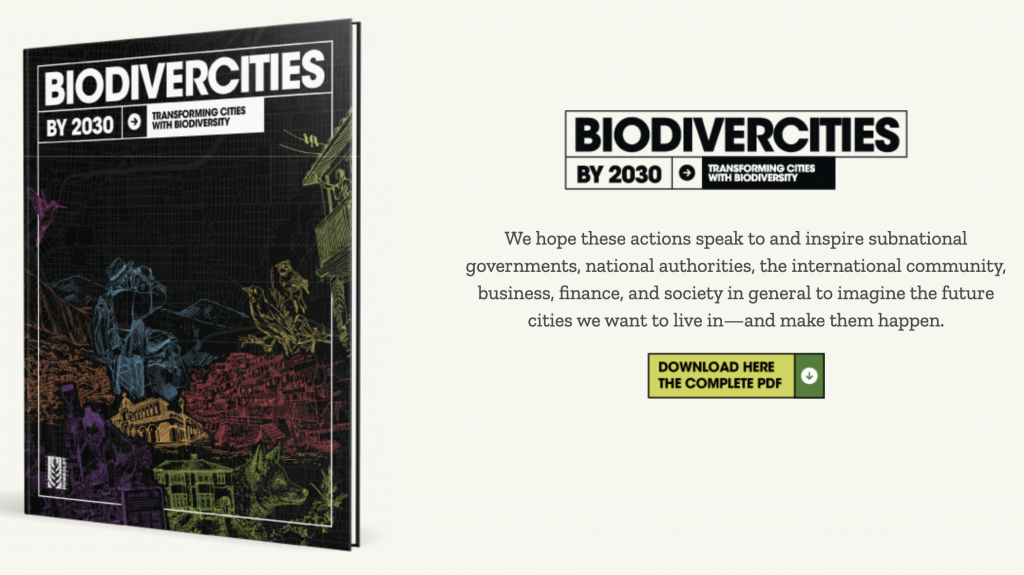
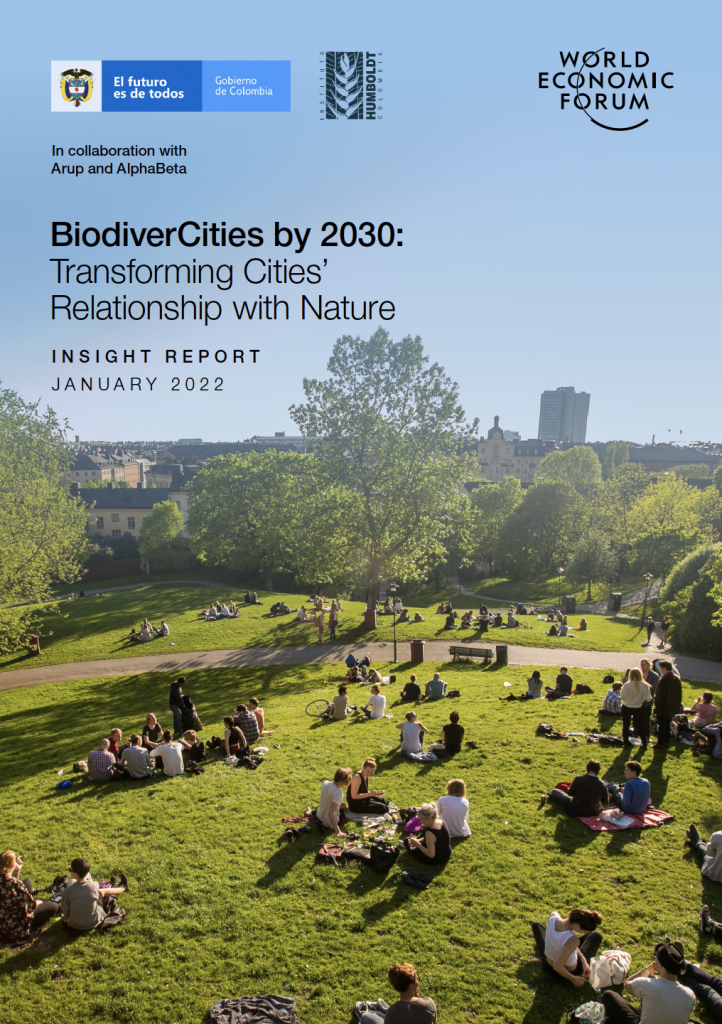
An opinion article on Synecoculture and urban augmented ecosystems was published in the book “BiodiverCities by 2030: Transforming Cities with Biodiversity”:

Funabashi, M. Living in a Hotspot of City and Biodiversity. The Case of Synecoculture. P. 252-253. In: Mejía, M.A., Amaya-Espinel, J.D. (eds.). BiodiverCities by 2030: Transforming Cities with Biodiversity. Bogotá. Instituto de Investigación de Recursos Biológicos Alexander von Humboldt. 2022. 288 pages.

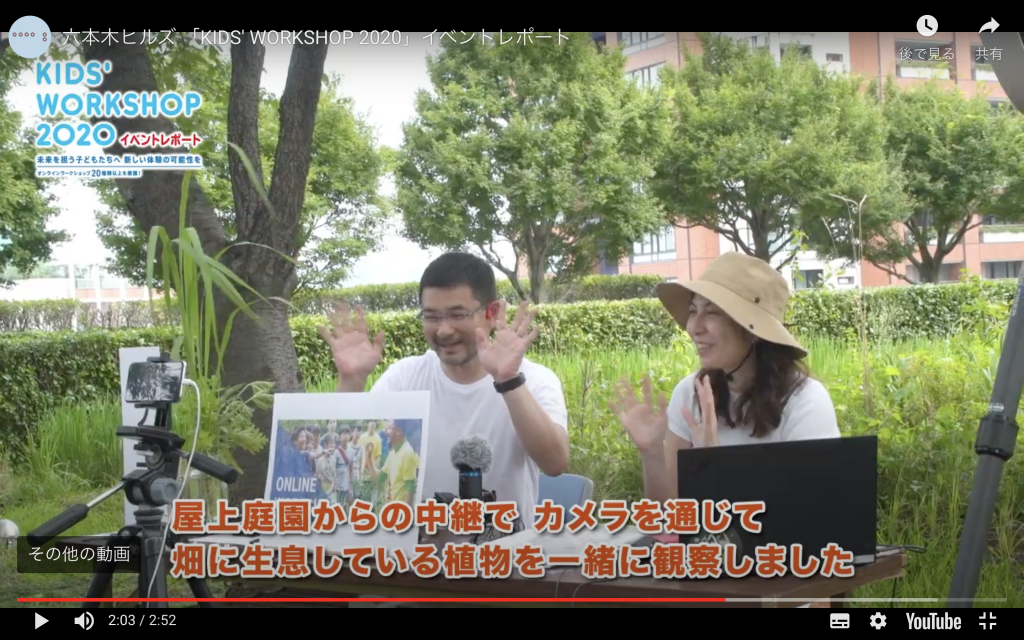
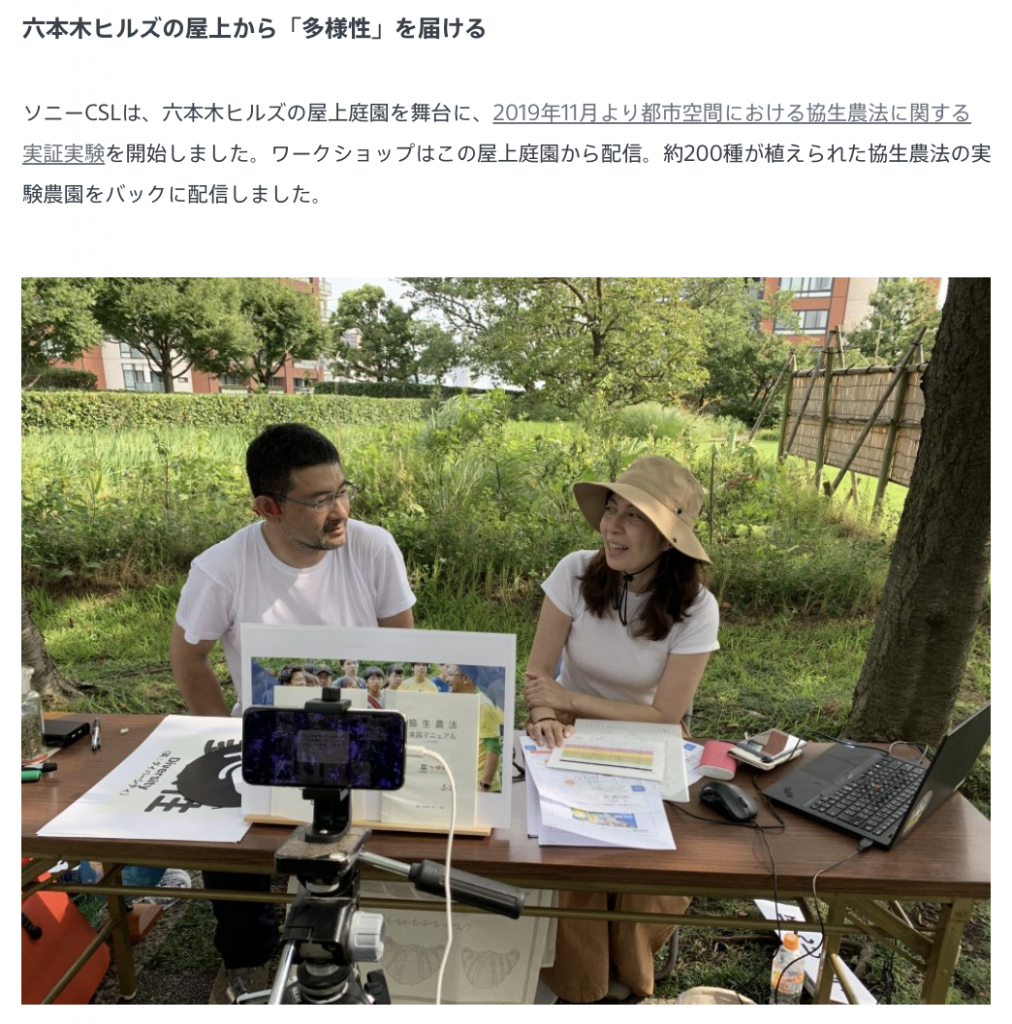
KIDS WORKSHOP 2020 @六本木ヒルズ に参加

森ビル株式会社が主催する、未来を担う子供たちへ新しい体験の可能性を提供するキッズワークショップに、Sony CSLより協生農法のチームが参加し、ワークショップ「いつもは見えない生態系ネットワークの存在について学ぼう!」を開催しました。

森ビルによるイベントレポート
Sony CSL によるイベントレポート

Publication of useful plant species potentially introducible to Synecoculture fields in the Sahel

Synecoculture project team in SonyCSL has published online interactive graph interfaces of the useful plant databases, jointly constructed with CARFS and Université de Ouagadougou 1.

Click images to access interactive graph interfaces:

TinaWeb version
Gephi version

Details of the database

The database comprises 837 useful plant species collected from existing literature on the vegetation of the Sahel (shown with blue nodes) in collaboration with CARFS and Université de Ouagadougou 1.

Using the GloBI database, 15396 plant and animal species in total were detected (shown with green nodes) for having known biological interactions on 629 of these 837 species.

Publication of a book chapter

Masa Funabashi contributed a chapter “Water and Ecosystem Cycles Mediated by Plant Genetic Resources for Food and Agriculture” in the book “Genetic Diversity in Plants”.

Masatoshi Funabashi (November 5th 2018). Water and Ecosystem Cycles Mediated by Plant Genetic Resources for Food and Agriculture [Online First], IntechOpen, DOI: 10.5772/intechopen.79781. Available from: https://www.intechopen.com/online-first/water-and-ecosystem-cycles-mediated-by-plant-genetic-resources-for-food-and-agriculture

協生農法生態系ネットワーク(試験版)

日本各地の協生農園で観測された動植物の共起関係を表現したグラフを作成しました。

このグラフは、2011年から2014年の間にSonyCSLの協生農法プロジェクトが観測したデータに基づき、10箇所程度の協生農法実験農園を中心に、同じ日に同じ場所で観測された植物と昆虫の共起関係を表しています。
協生農法を実践する際に、同じ場所で同じ時期に育つ植物種や、観測できる昆虫種の探索にお使いください。

協生農法の生態系ネットワークを表示する

使い方の例:
・上記リンクをクリックしてグラフを表示し、上部の検索欄にカタカナの和名で植物名・昆虫名を入力すると、観測データがある場合は画面の中心に表示されます。
・上部の検索欄に月名に相当する2桁の数字(1月なら01、2月なら02など)を入力すると、観測された年月日の候補が8桁の数字(20110402なら2011年4月2日)と観測場所の略称と共に表示され、選択するとその時に観測された植物種・昆虫種のリストが左側に、グラフが右側に表示されます。
・画面右側のグラフは、要素の円を直接クリックして関係している部分グラフを表示したり、画面の背景をクリック&ドラッグして表示位置をずらしたり、スライドバーを使ってズームしたりすることができます。
・各植物種・昆虫種の詳細は、Google検索などを使って調べてみてください。

グラフの各部分の意味は次の通りです:

・緑の円は、植物種を表しています。
・紫の円は、昆虫種を表しています。
・黄色の円は、観測時の年月日や場所などのキーワードを文法要素に分解したものを表しています。(初歩的なプログラムを用いているため、意味をなさない音節に分解されてしまっているものも多く含まれています)
・オレンジの円は、界・門・綱・目・科などの分類学上のグループを表しています。

円と円をつなぐ線は、
・植物種(緑の円)同士であれば同じ日に同じ場所で観測された植物種を表しています。
・昆虫種(紫の円)同士であれば同じ日に同じ場所で観測された昆虫種を表しています。
・植物種や昆虫種とキーワード(黄色の円)をつないでいれば、同じ日に同じ場所で観測された植物種・昆虫種とそれらの状況を記述するキーワードの対応関係を表しています。
・植物種や昆虫種と分類学上のグループ(オレンジの円)をつないでいれば、分類学的な対応関係を表しています。

画面の右側の区分に、上記の表示に基づき生態系の共起関係ネットワークが表示されています。
画面の左側の欄には、選択した円と線で繋がっている他の円のリストが表示されています。
左側のリストの要素をクリックすることでその円を中心にしたグラフが右側の区分に表示され、リストがその円を中心とした共起関係に更新されます。

Publication of Review Article in Plant Biotechnology

Masatoshi Funabashi has published the following review article:

M. Funabashi, “Synecological farming: Theoretical foundation on biodiversity responses of plant communities” Plant Biotechnology, special issue plants environmental responses, 16.0219a

This article explains the integrated model of physiological and ecological optima, IMPEO, which makes the theoretical foundation of Synecoculture.

In the same volume also co-authored the following articles:

Kousaku Ohta, Tsuyoshi Takeshi, Masatoshi Funabashi, Shoji Oda “Naturally Grown Rucola, Eruca sativa, contains more a-linolenic acid than Conventionally Grown Rucola”Plant Biotechnology, special issue plants environmental responses, 16.0217b

λ Tsuyoshi Mizoguchi, Masatoshi Funabashi “Environmental responses of plants: Biological interactions in the homogenous population or community (mixed populations)” Plant Biotechnology, Vol. 33 (2016) No. 4, 211-212