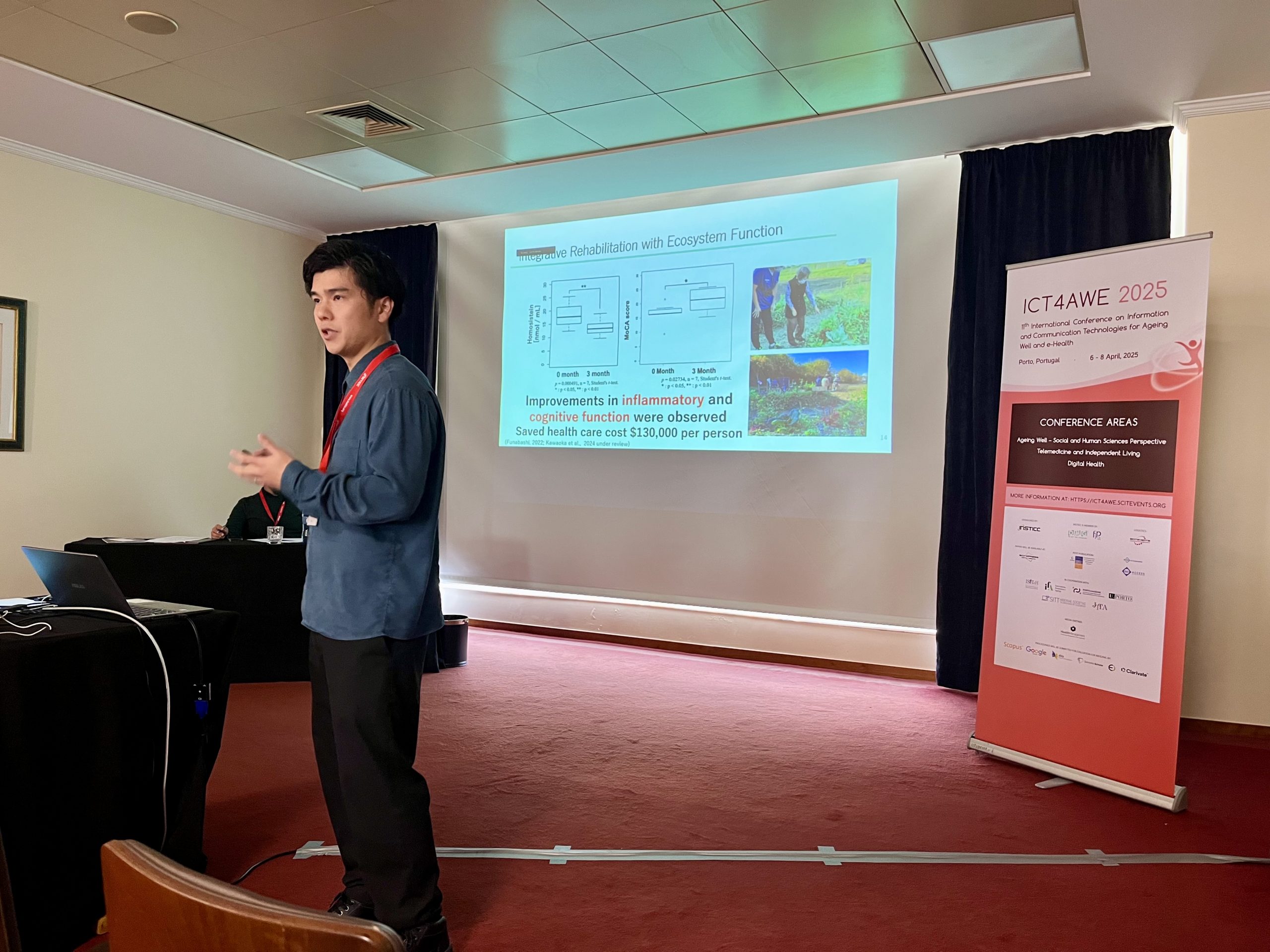
Masa Funabashi a présenté les projets de Synécoculture lors de plusieurs conférences à Paris.
・Conférence : « Synécoculture : l’agroécologie augmentée par les sciences de la complexité »
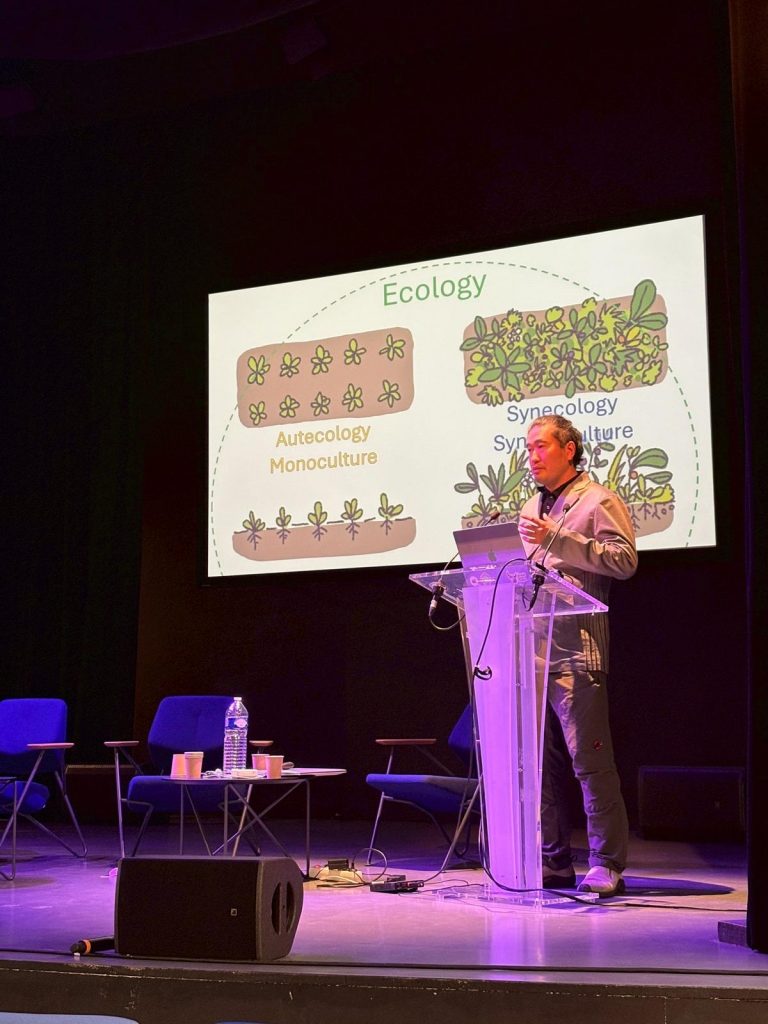
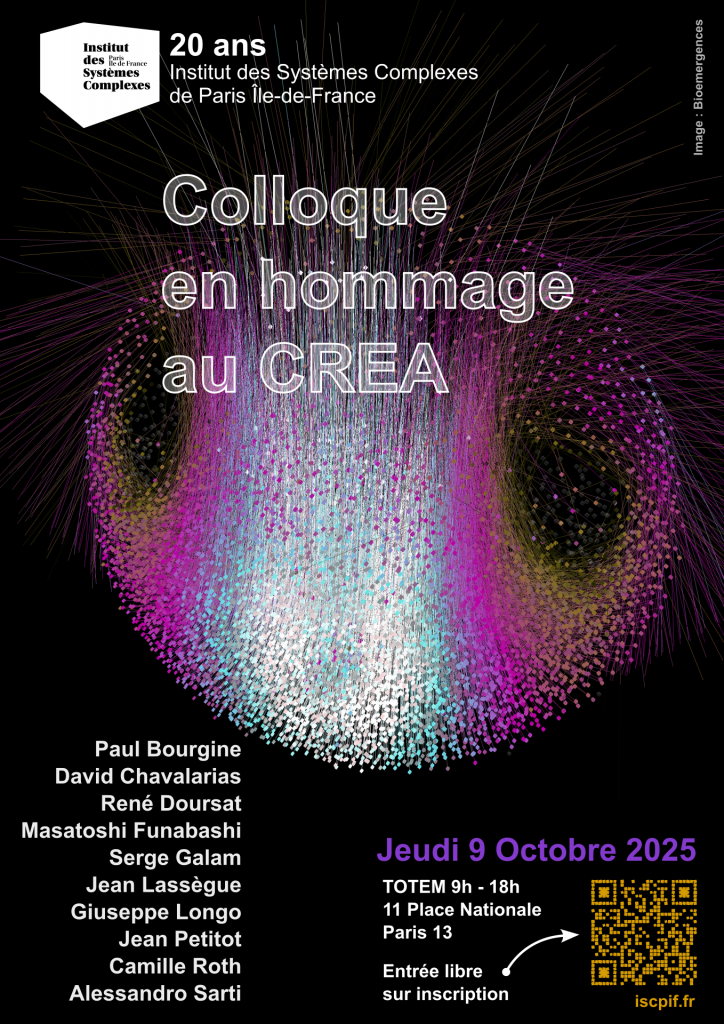
Conférence sur la Synécoculture avec Vergers Urbains:



Masa Funabashi a présenté les projets de Synécoculture lors de plusieurs conférences à Paris.
・Conférence : « Synécoculture : l’agroécologie augmentée par les sciences de la complexité »
Conférence sur la Synécoculture avec Vergers Urbains:

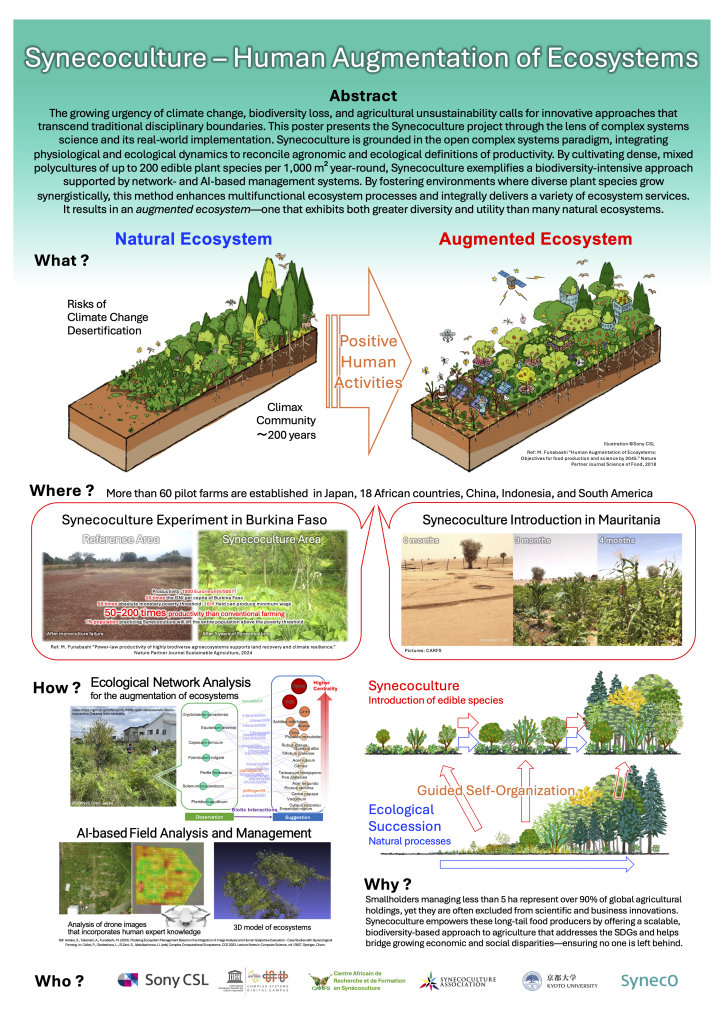
Masa Funabashi presented a poster on Synecoculture at the Conference on Complex Systems 2025, held from September 1 to 5 in Siena, Italy.
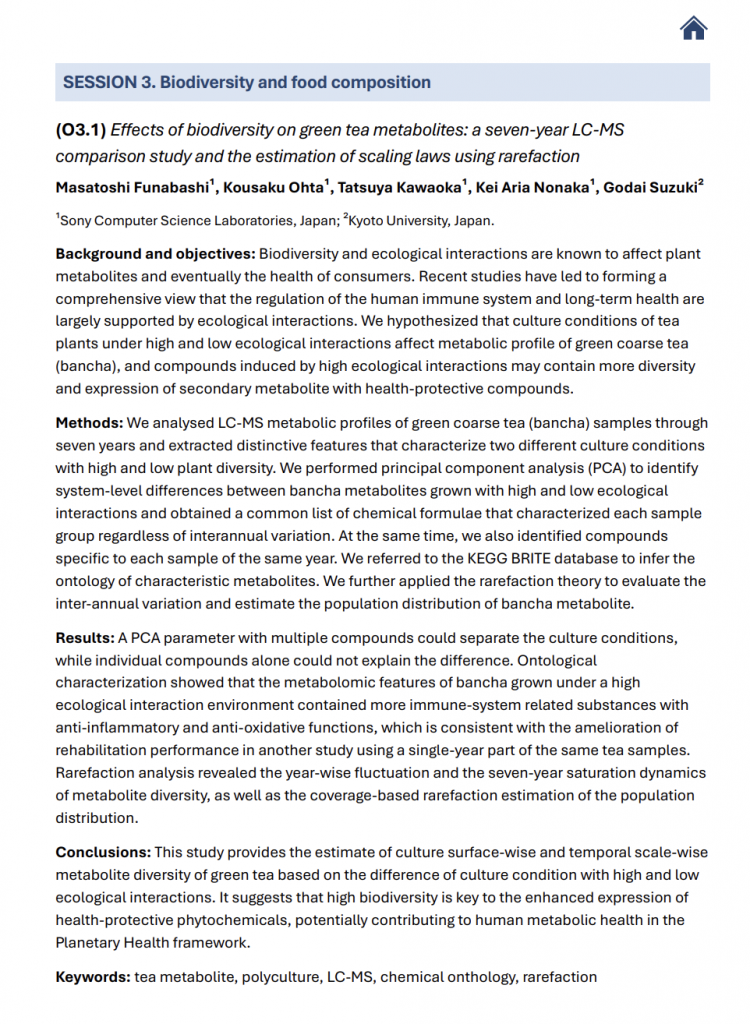
Masa Funabashi presented at the 14th International Food Data Conference, held 1–3 September 2025 in Rome, Italy.
Oral presentation title: Effects of biodiversity on green tea metabolites: a seven-year LC-MS comparison study and the estimation of scaling laws using rarefaction
Authors: Masatoshi Funabashi, Kousaku Ohta, Tatsuya Kawaoka, Kei Aria Nonaka, Godai Suzuki
See the agenda and book of abstracts
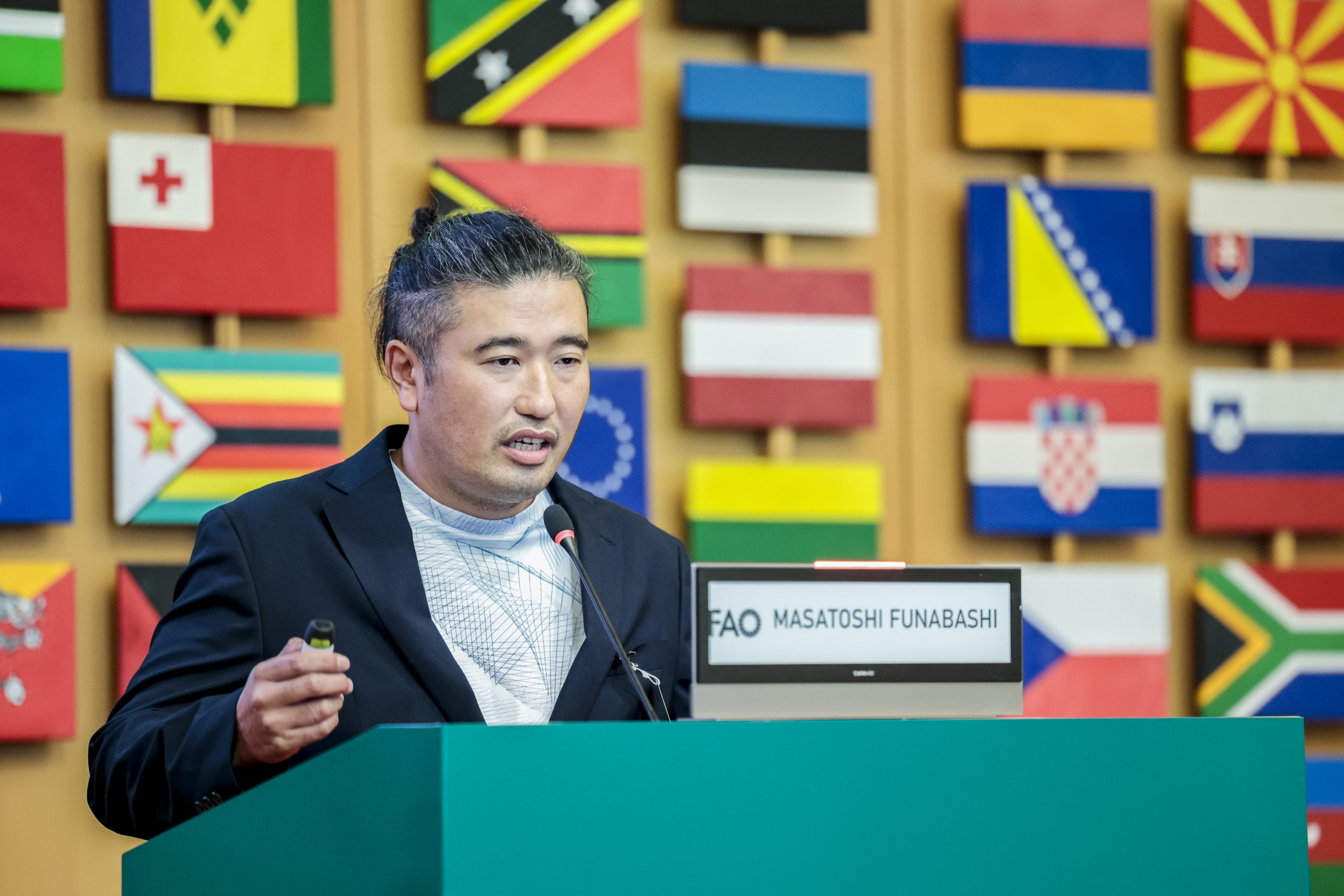
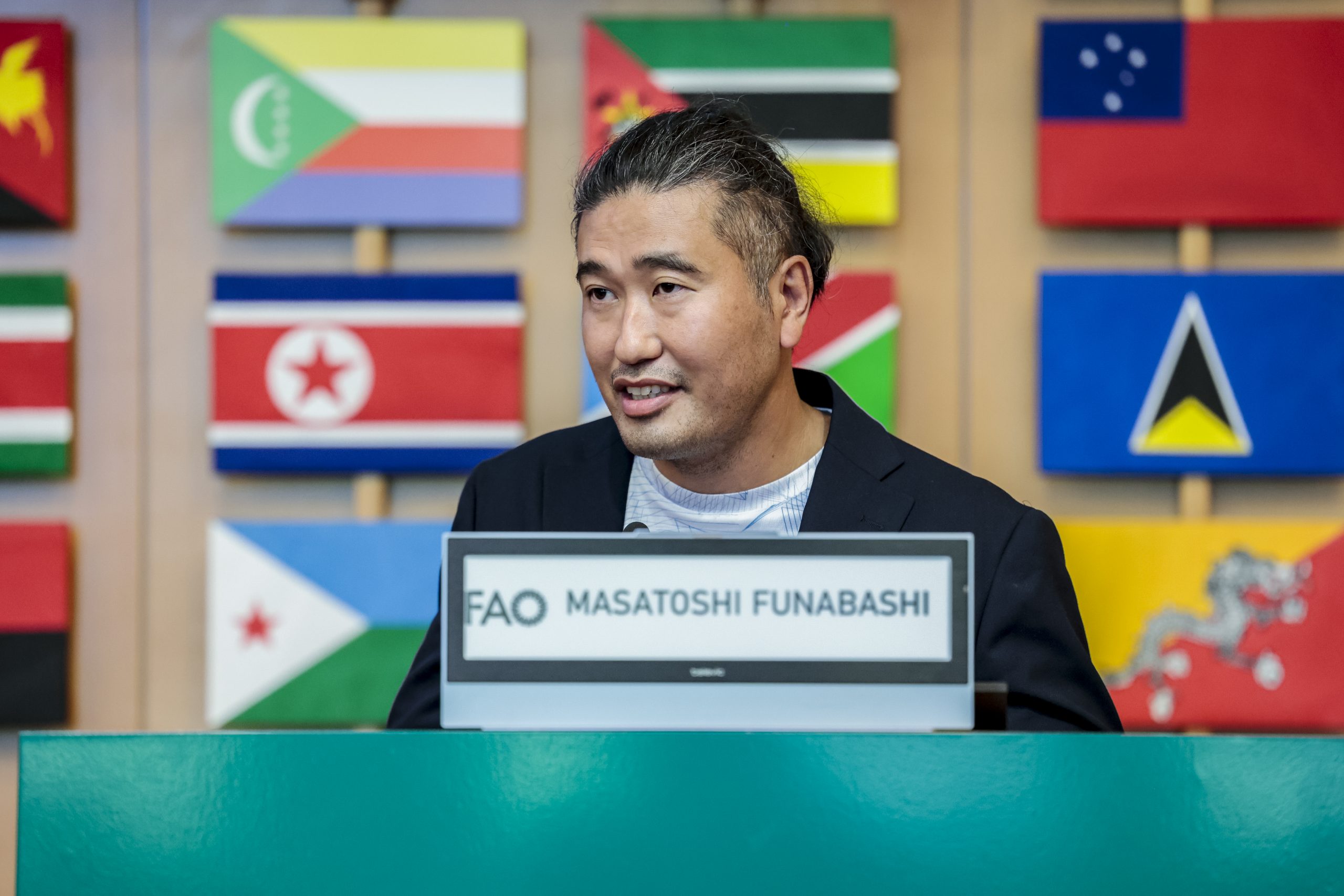
舩橋真俊が、以下のイベントに登壇しました。
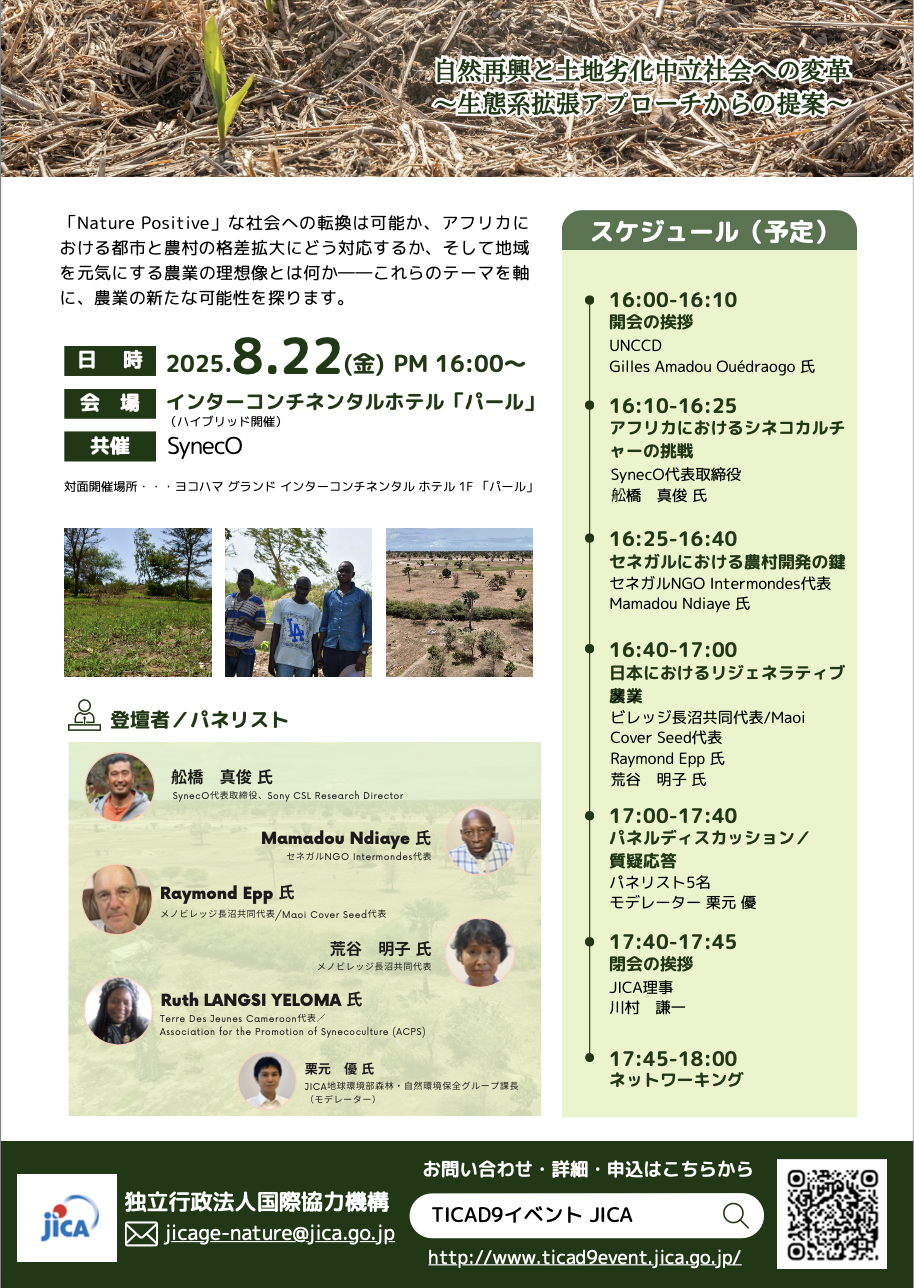
JICA主催 TICAD9サイドイベント
自然再興と土地劣化中立社会への変革~生態系拡張アプローチからの提案~
イベントWEBサイト:https://ticad9event.jica.go.jp/jp/event/detail_021.html
日時:2025年8月22 日(金)16:00~18:00
会場:ヨコハマ グランド インターコンチネンタル ホテル 1F 及びオンライン
背景
世界経済フォーラム(WEF, 2020)によれば、世界GDPの半分以上(44兆ドル相当)が自然に依存しています。しかし、全動植物種の約25%(約100万種)が絶滅の危機にあり(IPBES, 2019)、状況は依然深刻です。
2022年12月の生物多様性条約(CBD)COP15では、「昆明・モントリオール生物多様性枠組(GBF)」が採択され、2030年までに生物多様性を回復軌道に乗せ、2050年までに自然と調和した世界を実現することが目指されました。ここで「ネイチャーポジティブ(自然再興)」は、生物多様性の損失を止め、回復を図る共通目標として位置付けられました。
また、国連砂漠化対処条約(UNCCD)は「土地劣化中立(LDN)」を提唱し、土地の劣化を回復で相殺し、状態を維持または改善することを目指しています。 ネイチャーポジティブと土地劣化中立は、いずれも2030年までの環境劣化の停止と生態系回復、2050年の自然と共生する世界の実現に向けた重要な国際目標です。
中でも農業分野は、淡水使用、栄養塩の流出、化学物質による汚染、森林の土地利用転換などにより、土地劣化と生物多様性喪失に大きく影響しています。
一方で、農業における生態系サービスの活用と、人間による生態系の拡張(Ecosystem Augmentation)を組み合わせたアプローチにより、生態系への負荷を減らしつつ、自然と人の健全な機能を回復する農業の実現が可能であることが、さまざまな取り組みによって示されています。
これらは、UNCCDが推進する再生型農業やアグロエコロジーの実践とも一致しており、土壌の健康回復とLDN達成に貢献するものです。
本イベントでは、
について議論します。
キー・クエスチョン
目的
登壇者
舩橋 真俊 氏 SynecO代表取締役、Sony CSL Research Director
Mamadou Ndiaye 氏 セネガルNGO Intermondes代表
Ruth LANGSI YELOMA氏Terre des jeunes Cameroon代表/Centre Africain de Recherche et de Formation en Synécoculture (CARFS)カメルーンコーディネーター
JICA:栗元 優(モデレーター) 地球環境部森林・自然環境保全グループ課長
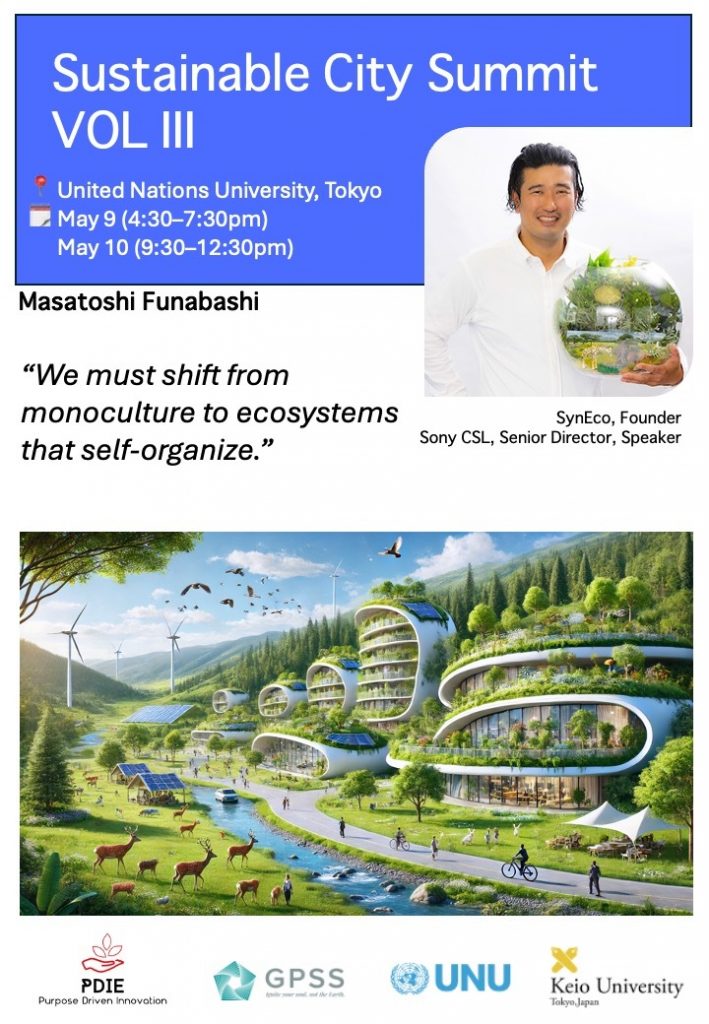
Masa Funabashi presented about Synecoculture at Sustainable City Summit VOL III held at United Nations University, Tokyo on May 10th 2025.
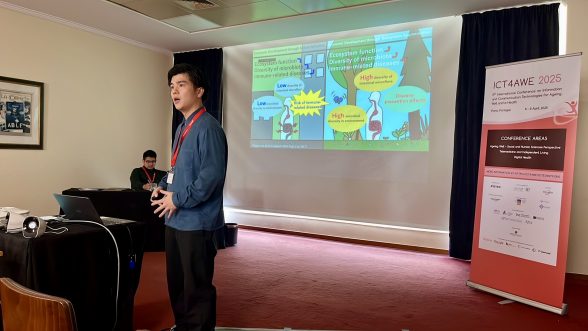
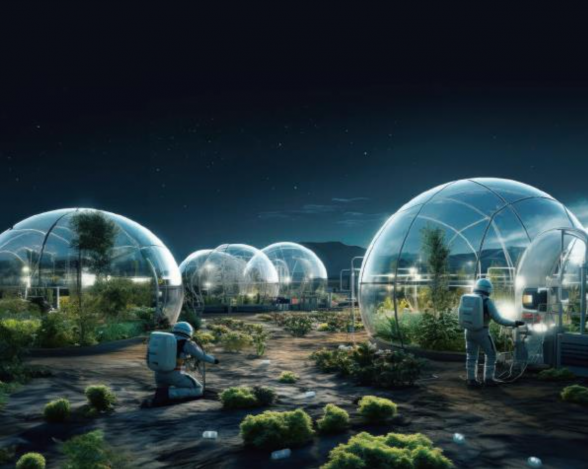
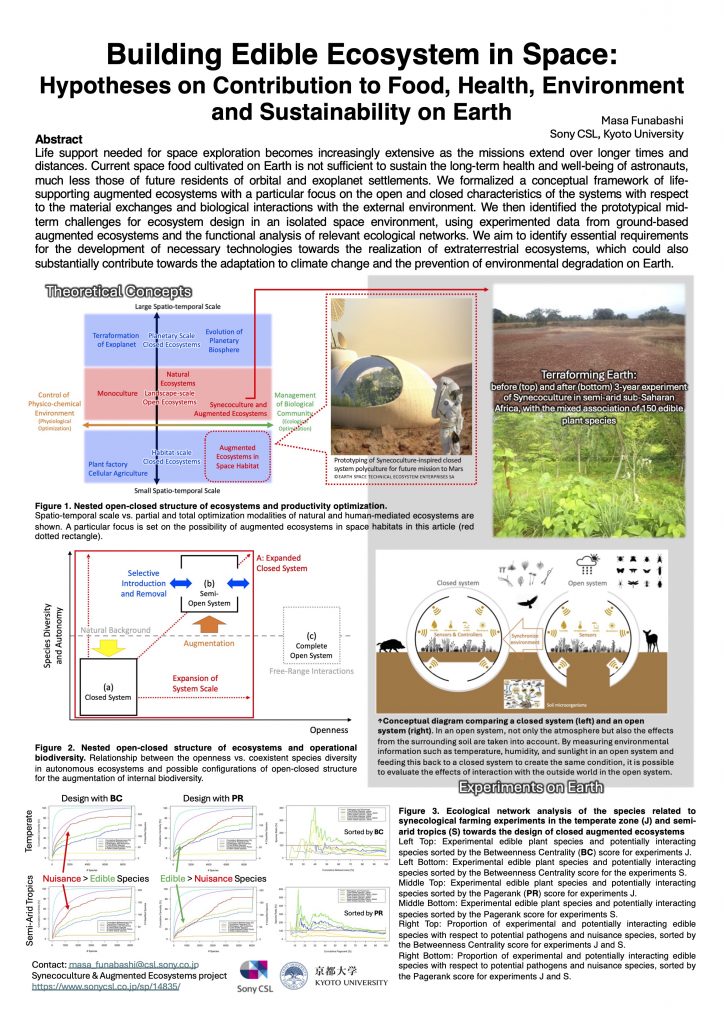
Masa Funabashi presented a poster at the International Workshop on Space Agriculture and Horticulture 2025:

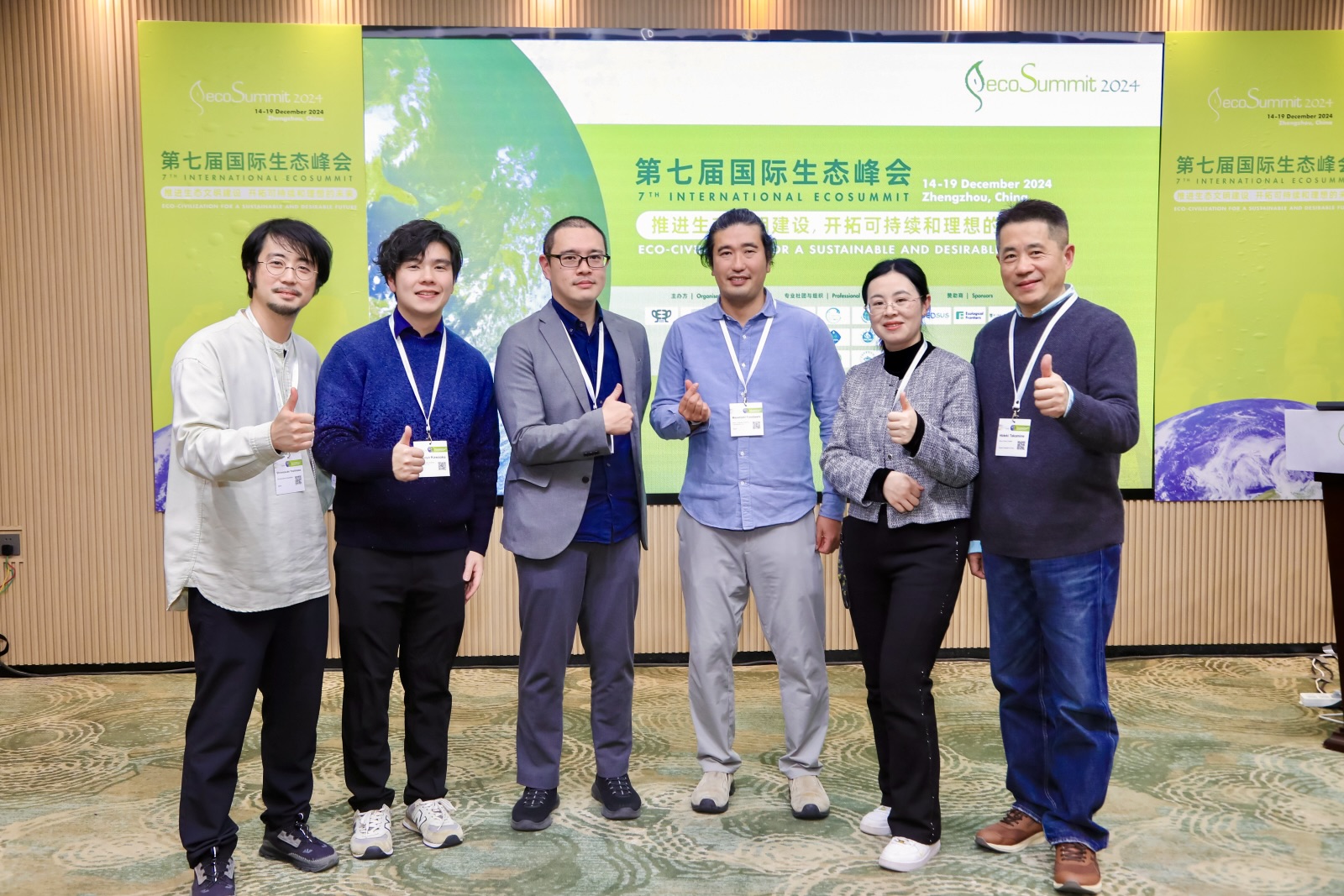
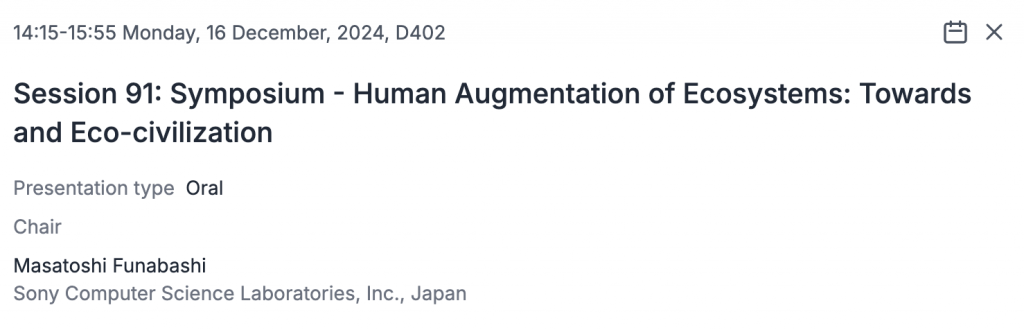
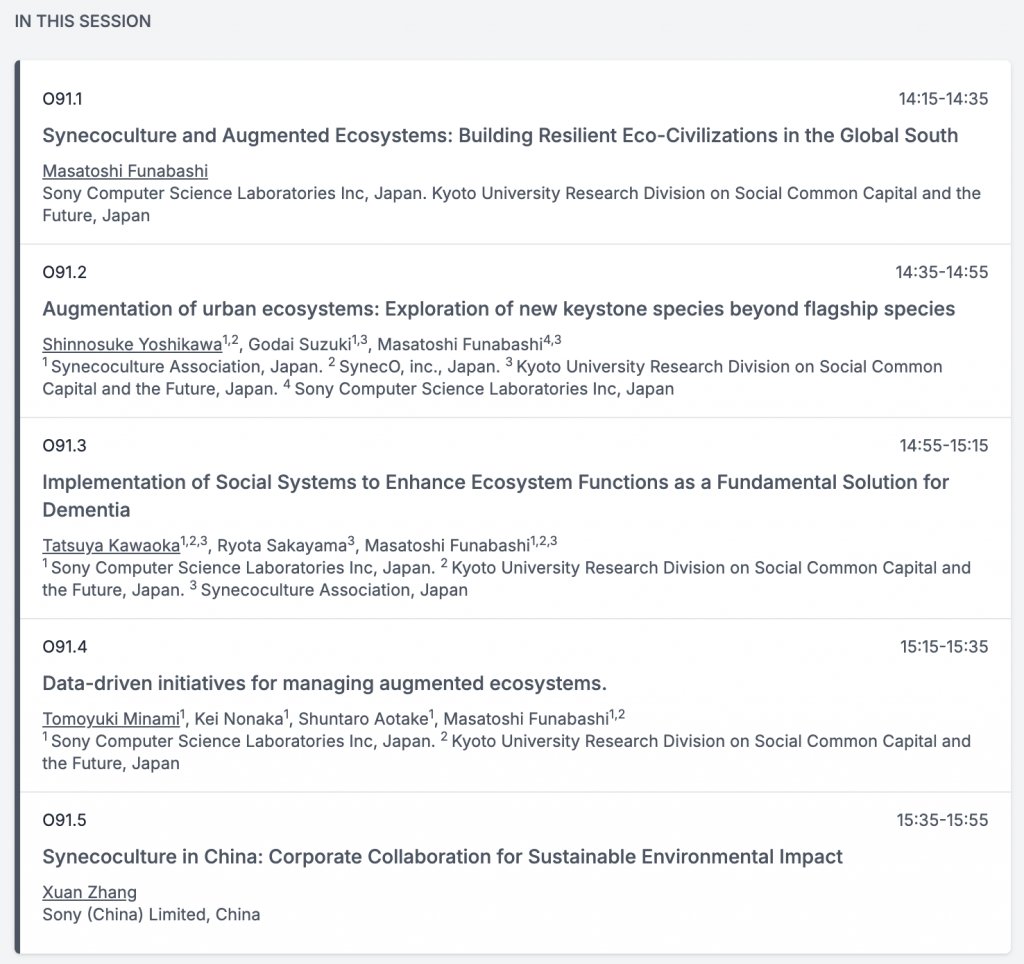
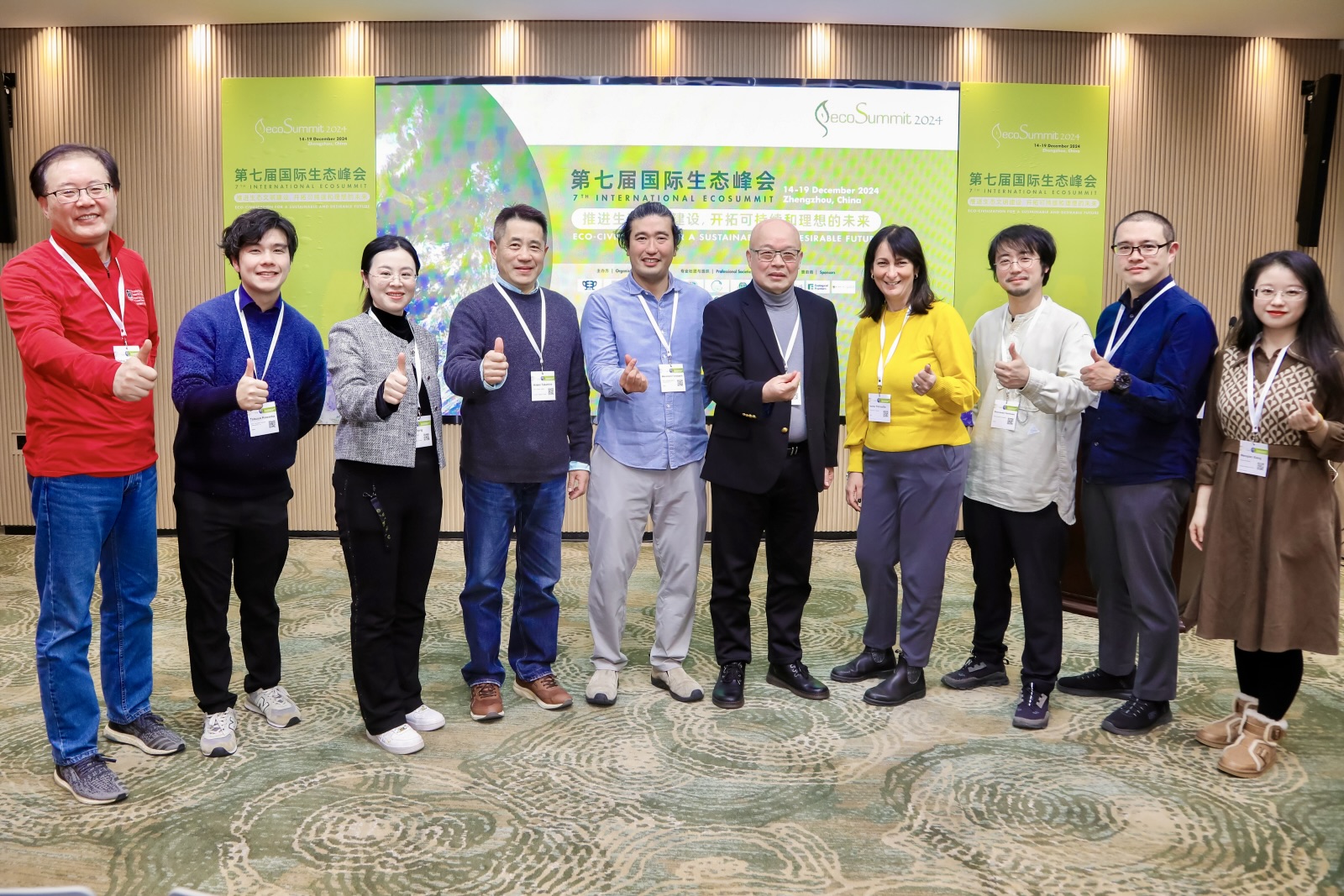
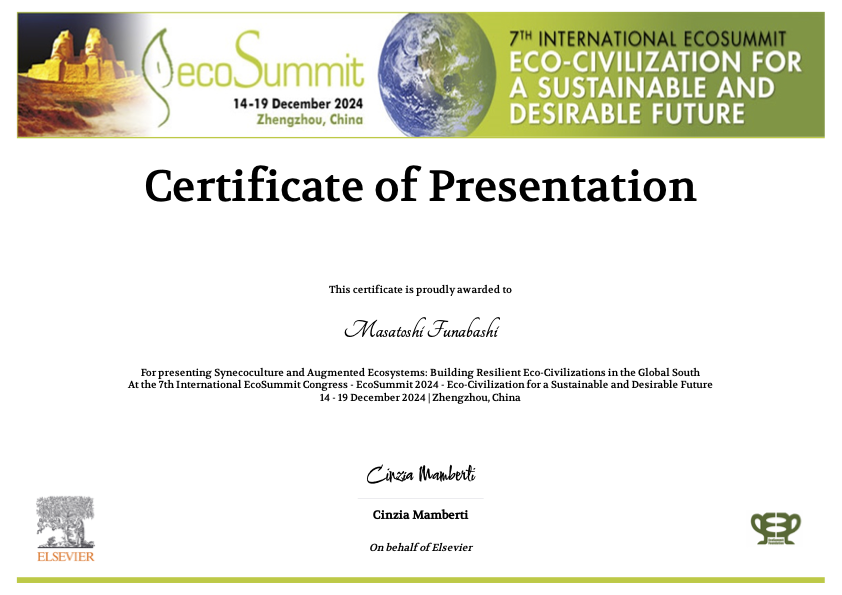
Symposium “Human Augmentation of Ecosystems: Towards an Eco-Civilization“
Chair: Masa Funabashi Co-Chair: Tatsuya Kawaoka
Abstract
In line with Ecosummit 2024’s theme of fostering “Eco-Civilization for a Sustainable and Desirable Future,” this symposium will explore pioneering advancements in ecosystem augmentation, drawing from recent research and practical applications in Japan, Africa, Latin America and China. Under the theme “Human Augmentation of Ecosystems,” which was previously published as a perspective from Nature Research [1], we aim to convene interdisciplinary perspectives on nature-positive solutions grounded in ecological science, artificial intelligence, and ESG-based management strategies. These contributions will highlight how ecosystem augmentation can sustainably enhance biodiversity, health, and climate resilience, ultimately contributing to a shared natural-social common capital.
The symposium brings together experts from academia and industry, including speakers from Sony Group companies in Japan and China, which are advancing technological solutions for sustainable ecosystems, and the Research Division of Social Common Capital and the Future at Kyoto University, which is at the forefront of establishing frameworks for natural-social common capital. Our symposium will cover foundational science, innovative technologies, and emerging practices across different regions, emphasizing the role of ecosystems as self-organizing, resilient entities capable of supporting human well-being and environmental stability.
Objectives and Scope
The symposium’s goal is to present a comprehensive, multi-faceted exploration of ecosystem augmentation and its role in fostering eco-civilization. Key topics that will be explored by more than 4 presenters will include:
We will begin with the scientific underpinnings of ecosystem augmentation, focusing on Synecoculture, a method developed to achieve high biodiversity and productivity in human-managed ecosystems [2]. This approach leverages the natural interactions among plant species to create self-sustaining ecosystems without chemical inputs. Presentations will discuss the ecological principles and data underlying this system, offering insights into its global adaptability, particularly in regions with deteriorating agricultural viability.
With global biodiversity under unprecedented pressure, integrating big data and AI into ecosystem management is crucial for long-term resilience. Our symposium will highlight how big data and AI technologies can be deployed to monitor and optimize ecosystem functions, enhance real-time decision-making, and facilitate adaptive management practices that align with ESG priorities. We will share case studies from Sony Group companies, showcasing practical applications that merge ecological intelligence with advanced analytics.
As the Global South increasingly experiences environmental challenges, innovative ecosystem augmentation practices are emerging as viable solutions. We will feature new implementations in coastal regions of China, where ecosystem augmentation is mitigating habitat degradation, reducing run-offs that affect marine biodiversity, and strengthening local climate resilience. The potential scalability of these applications to other regions will also be discussed.
Finally, the symposium will delve into the connections between augmented ecosystems and human health, with a particular focus on immune-related diseases. Research is demonstrating that exposure to biodiverse environments can positively impact immune health, supporting ecosystem services as a public health strategy. We will present findings that suggest how augmented ecosystems contribute to a reduction in chronic illnesses linked to immune dysfunction.
Relevance and Significance
The concept of “Human Augmentation of Ecosystems” embodies a transformative vision for eco-civilization, fostering symbiotic relationships between human societies and natural systems. By engaging a multidisciplinary panel of experts, this symposium offers Ecosummit 2024 a valuable platform to examine the ecological, technological, and social dimensions of sustainable ecosystem management. Through international collaboration and innovative methodologies, this symposium will underscore the potential of augmented ecosystems as foundational assets for human resilience and a sustainable future.
References
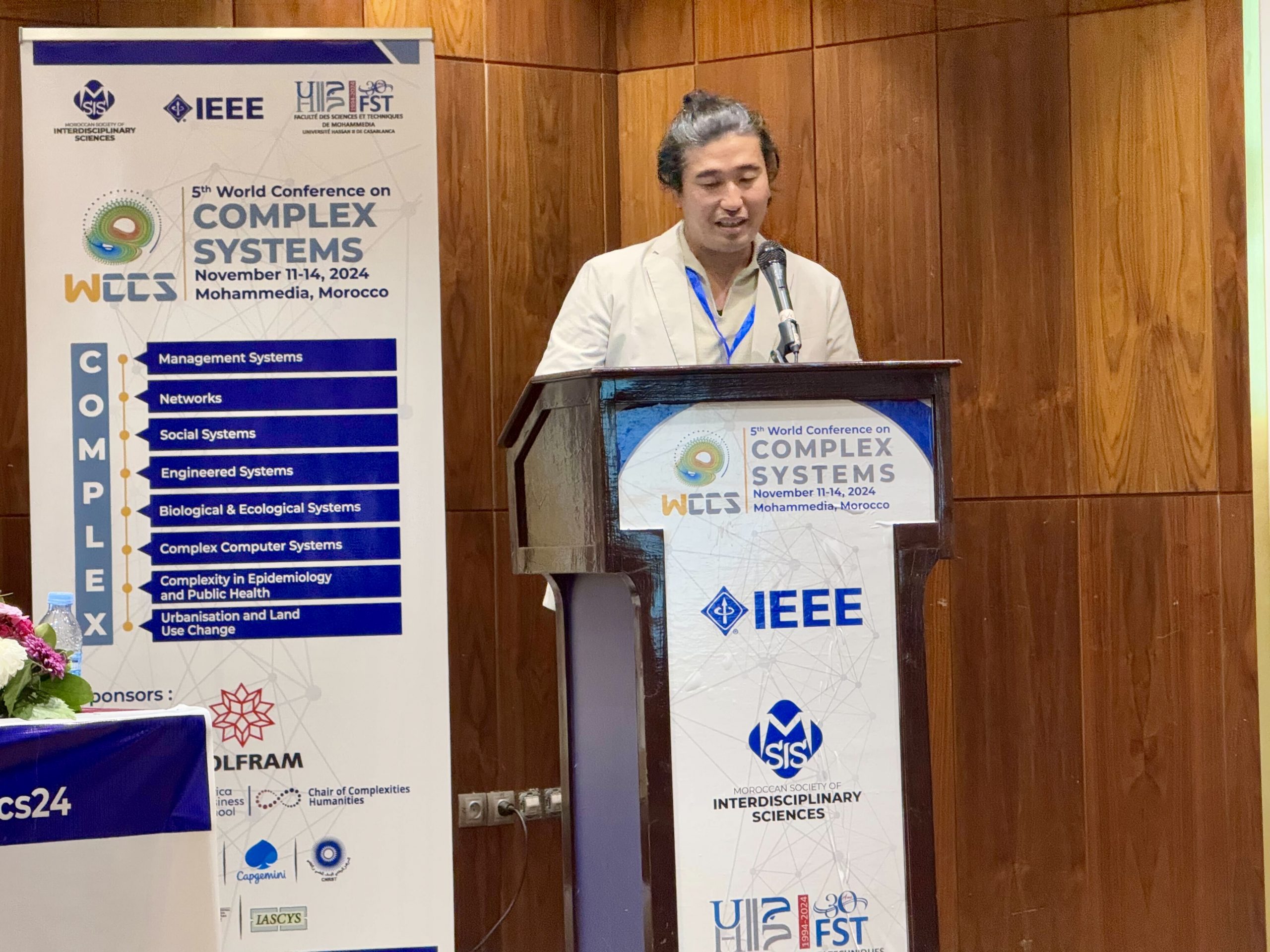
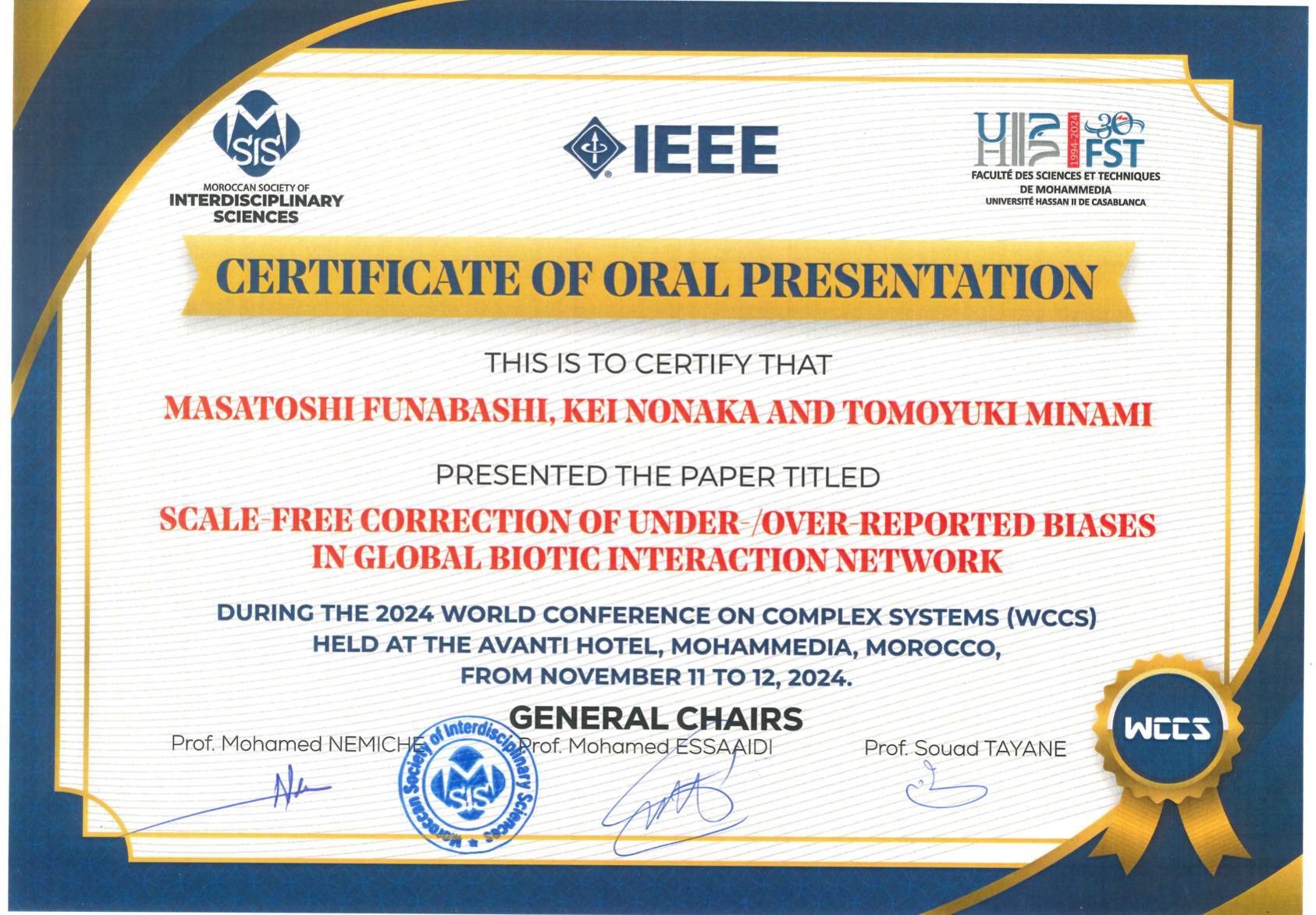
Masa Funabashi and Taka Sasaki presented the following papers at the 5th World Conference on Complex Systems, which was held on November 11th and 12th, 2024, in Casablanca, Morocco.
The abstract book is available here.
Link to the IEEE Proceeding of the 2024 World Conference on Complex Systems (WCCS)