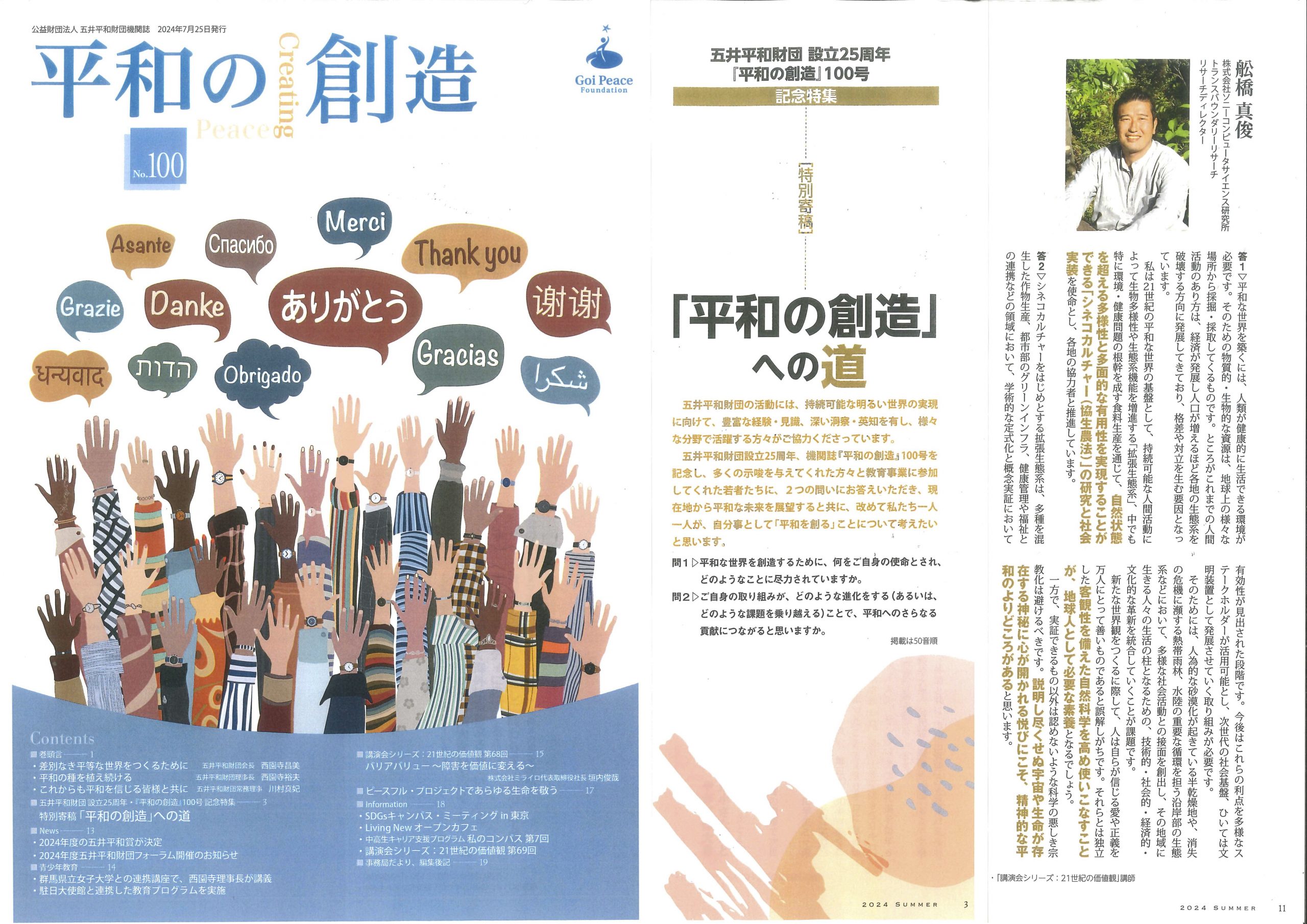
五井平和財団設立25周年・『平和の創造』100号記念特別寄稿「平和の創造」への道に、舩橋真俊が寄稿しました。


Le CARFS, avec le soutien scientifique et financier de Sony CSL, a implanté une ferme de démonstration lors de l’Expo Doha au Qatar, qui s’est tenue du 2 octobre 2023 au 28 mars 2024.


At the 28th Conference of the Parties (COP28) to the United Nations Framework Convention on Climate Change (UNFCCC) being held in Dubai from 30 November to 12 December 2023, Masatoshi Funahashi who is Research Director at Sony CSL and also President of SynecO, Inc., participated in a seminar held in the Japan Pavilion. He spoke about the initiatives of SynecO and on activities related to Synecoculture.

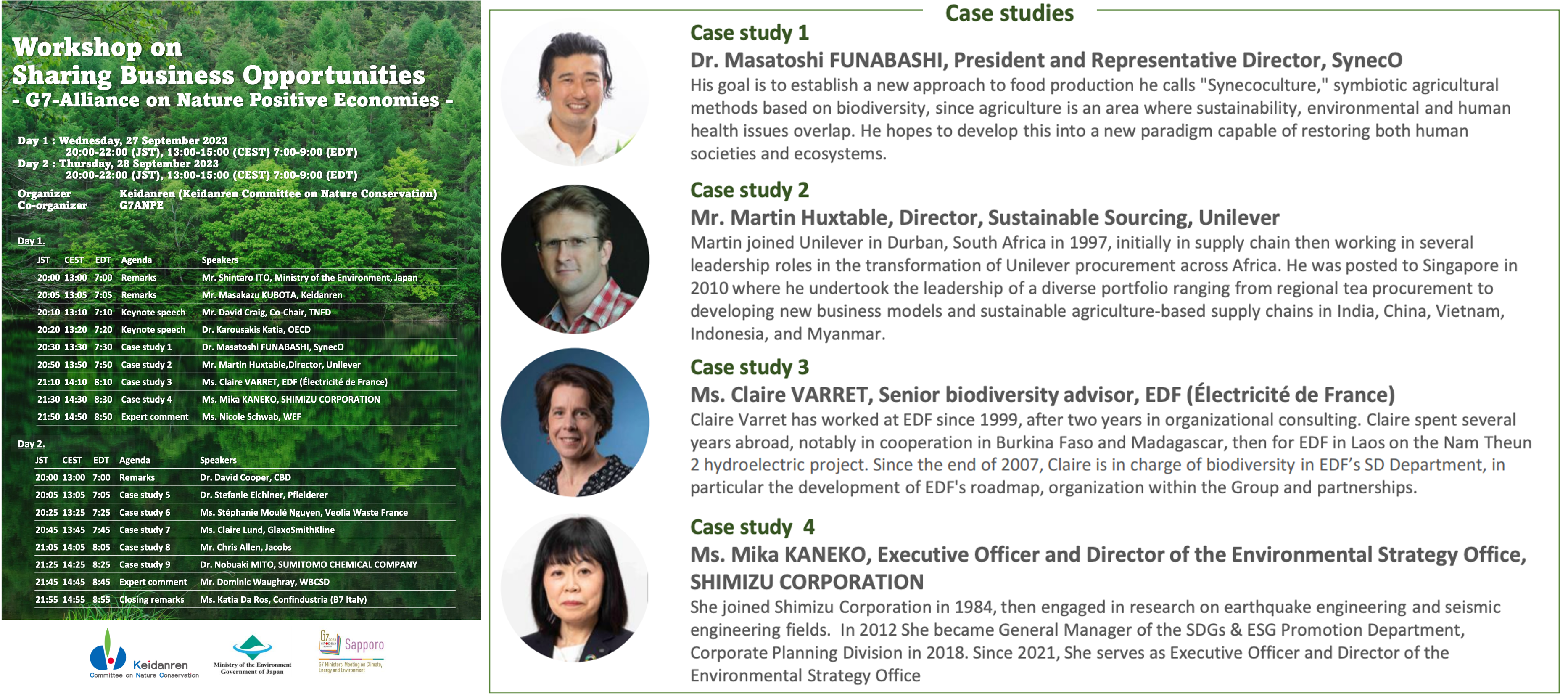
Masa Funabashi, President and Representative Director of SynecO, Inc., presented on Synecoculture and Augmented Ecosystems at a workshop of G7 Alliance on Nature Positive Economies.
The Synecoculture project at Sony CSL was featured in the Environment section of Sony’s sustainability report 2023.
Promoting Biodiversity through Synecoculture™*
Sony is promoting biodiversity and extending the reach of such efforts
on its sites through Synecoculture. Synecoculture is a farming method
advocated by Masatoshi Funabashi, senior researcher at Sony
Computer Science Laboratories, in which a wide variety of plants are
mixed and densely grown on a single area of farmland to create an
augmented ecosystem, thereby maximizing the circulation inherent
in an ecosystem, and by doing so, help overcome the trade-off
between productivity and environmental degradation.
Sony Group Enteritis in China have been widely deploying this technique
since fiscal year 2020 at sites across the country with coordinated efforts
both internally and externally. Five Synecoculture farms have now been
established on a total of 6,000 m2 of land, with over 2,000 kg of
vegetables harvested in the last three years. These initiatives were
recognized through an award from the Shanghai Municipal Commission
of Commerce (led by Shanghai Government) in fiscal 2022.
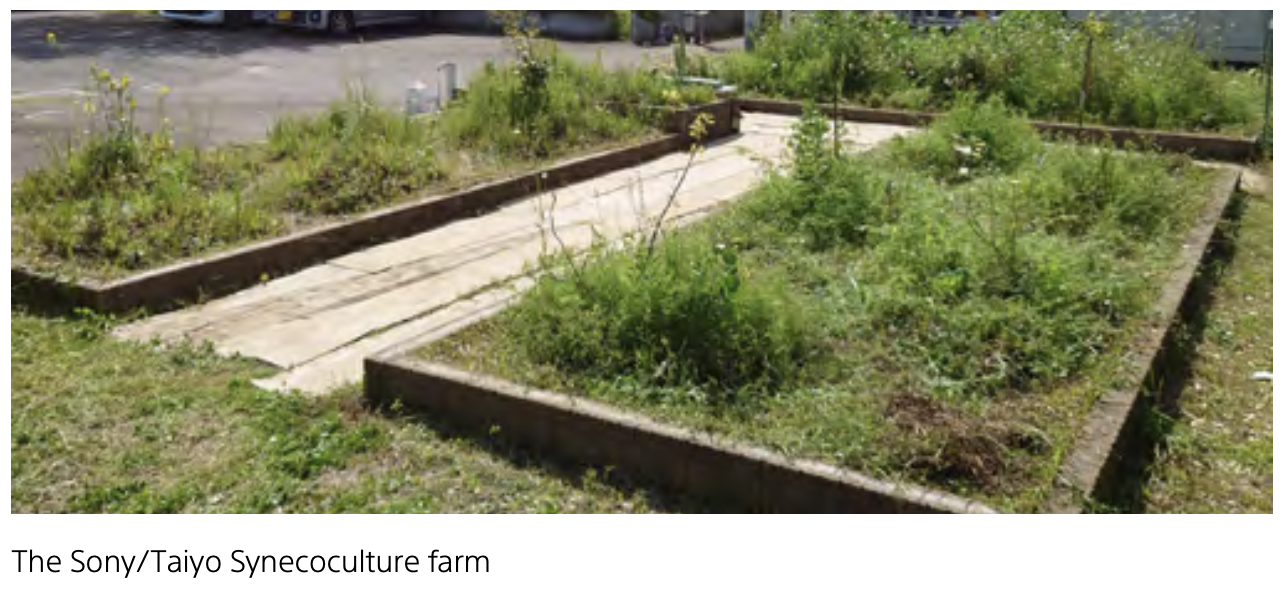
Sony/Taiyo Corporation started a Synecoculture farm in fiscal 2022
with the support of SynecO Co., Ltd., which operates a business
centered on Synecoculture, planting more than 100 species of plants.
Plants on the farm have continued to grow steadily, creating a health
ecosystem that provides radishes, potatoes and other vegetables
served in the employee cafeteria.
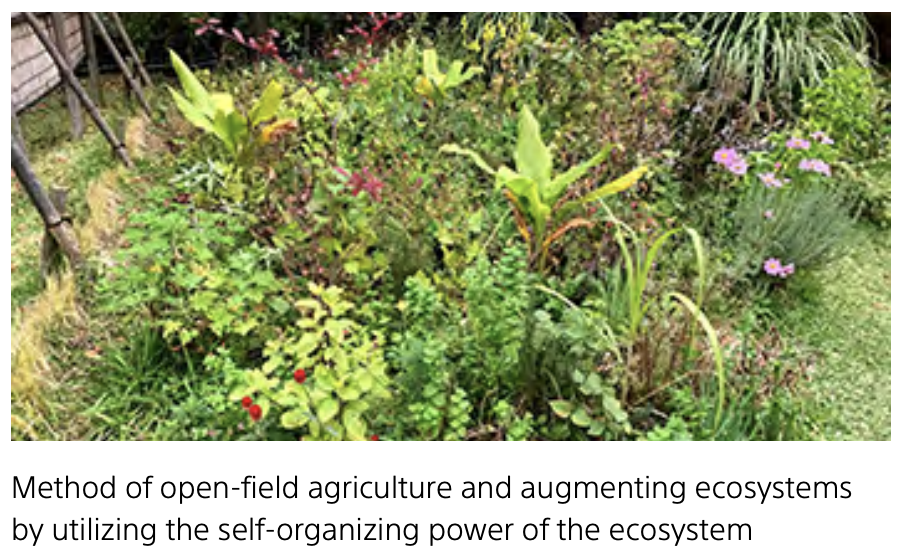
Synecoculture™* and Augmented Ecosystems
Conventional agriculture largely focuses on increasing productivity
from a single crop by plowing topsoil, spreading fertilizer, and
applying agrochemicals. These practices damage ecosystems and
cause environmental problems. Sony CSL successfully conducted
demonstration tests for Synecoculture, a new agricultural practice
that balances productivity and biodiversity, moving closer toward
sustainability. Synecoculture is already being used in the Sahel region
in Africa and has the potential to have a major global impact by
contributing to desert greening and helping local economies around
the world.
Synecoculture eliminates the need for the plowing, fertilizing, and
agrochemical use that impact the environment, by taking maximum
advantage of the material cycling that occurs naturally in ecosystems,
aiming to create rich ecosystems with a diverse mix of plants that
coexist together and grow lushly. The importance of building
ecosystems with a high degree of biological diversity and functionality
is increasing in response to climate change, food crises, and pandemics.
Synecoculture provides a fundamental solution to such global agenda.
Sony CSL is also working to supply new value through augmented
ecosystems, which expand the applications for Synecoculture beyond
food production to the creation of ecosystems with diverse objectives
and functions. The project supports education to enhance the
understanding of natural environments and adds new value to the
basic infrastructure of urban and living spaces. Building on this
project, Sony founded SynecO Inc. to create sustainable environments
and industries based on the renewable natural capital in which society
should be rooted.
*Synecoculture is a trademark of Sony Group Corporation.

大学院生・研究者のためのキャリアマガジン Acaric Journal vol.4 に、舩橋真俊のインタビューが掲載されました。
【株式会社ソニーコンピュータサイエンス研究所 舩橋真俊氏】土にも人にも多様性を ―拡張生態系によって育まれる越境する知の土壌―
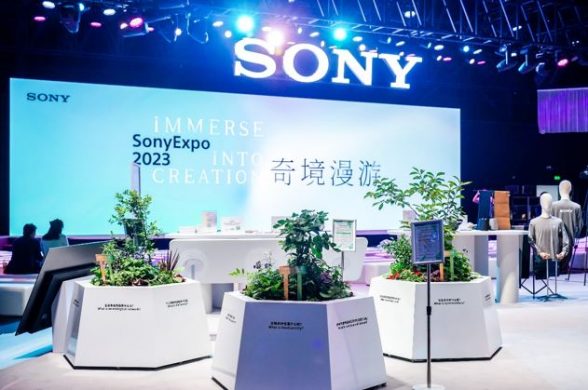
Synecoculture project was featured at Sony Expo in Shanghai.
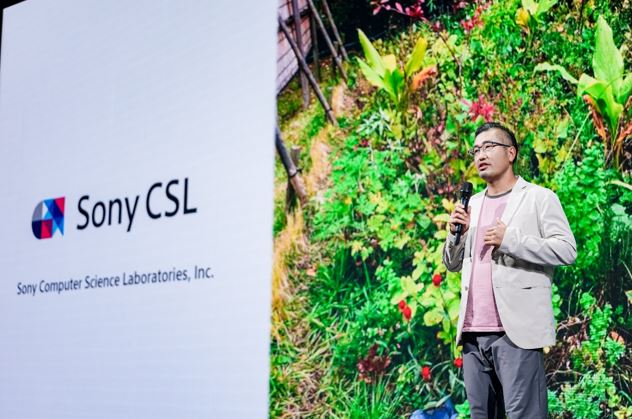
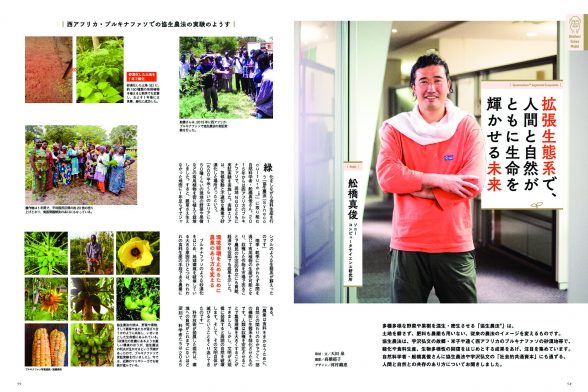
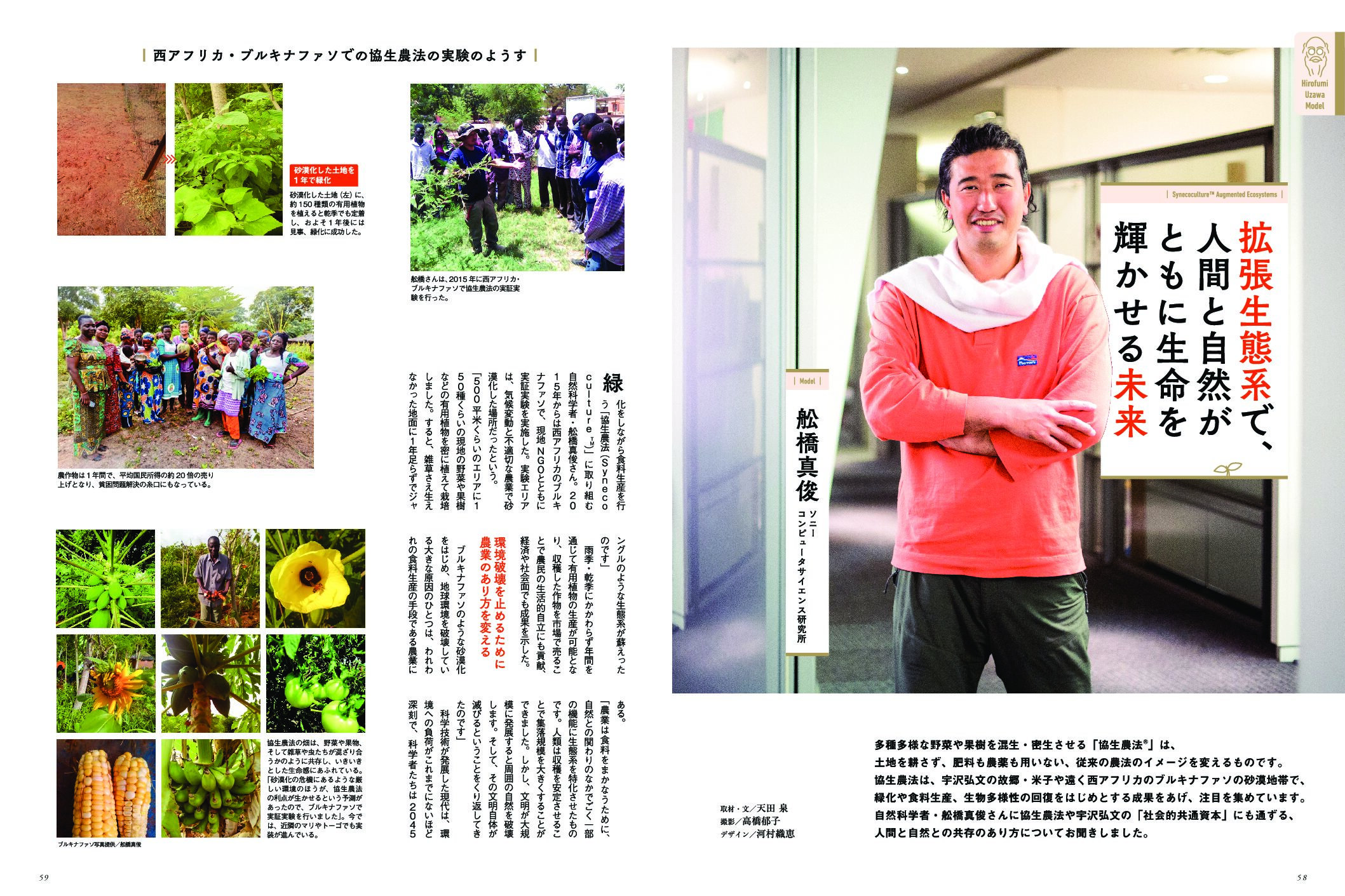
さんいんキラリ 春号(No54 4/1発売)に舩橋真俊のインタビューが掲載されてました。同記事はWEBでもご覧いただけます。
A group of researchers led by Takuya Otani, an Assistant Professor at Waseda University, in collaboration with Sustainergy Company and Sony CSL, have designed a new robot that can perform Synecoculture effectively. It manages a variety of mixed plants grown in the shade of solar panels, an otherwise unutilized space. An article describing their research was published in Volume 13, Issue 1 of Agriculture, on 21 December 2022. The press release on this article was published on AAAS EurekAlert! and Waseda University websites:
Waseda University News A Sowing, Pruning, and Harvesting Robot for Synecoculture Farming