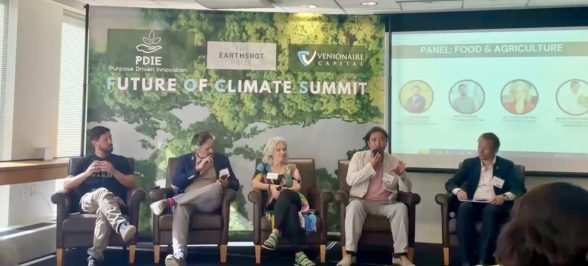
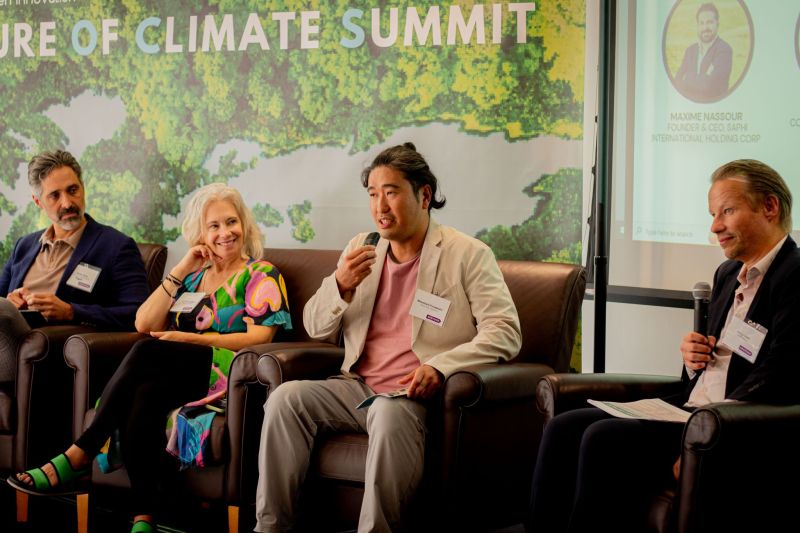
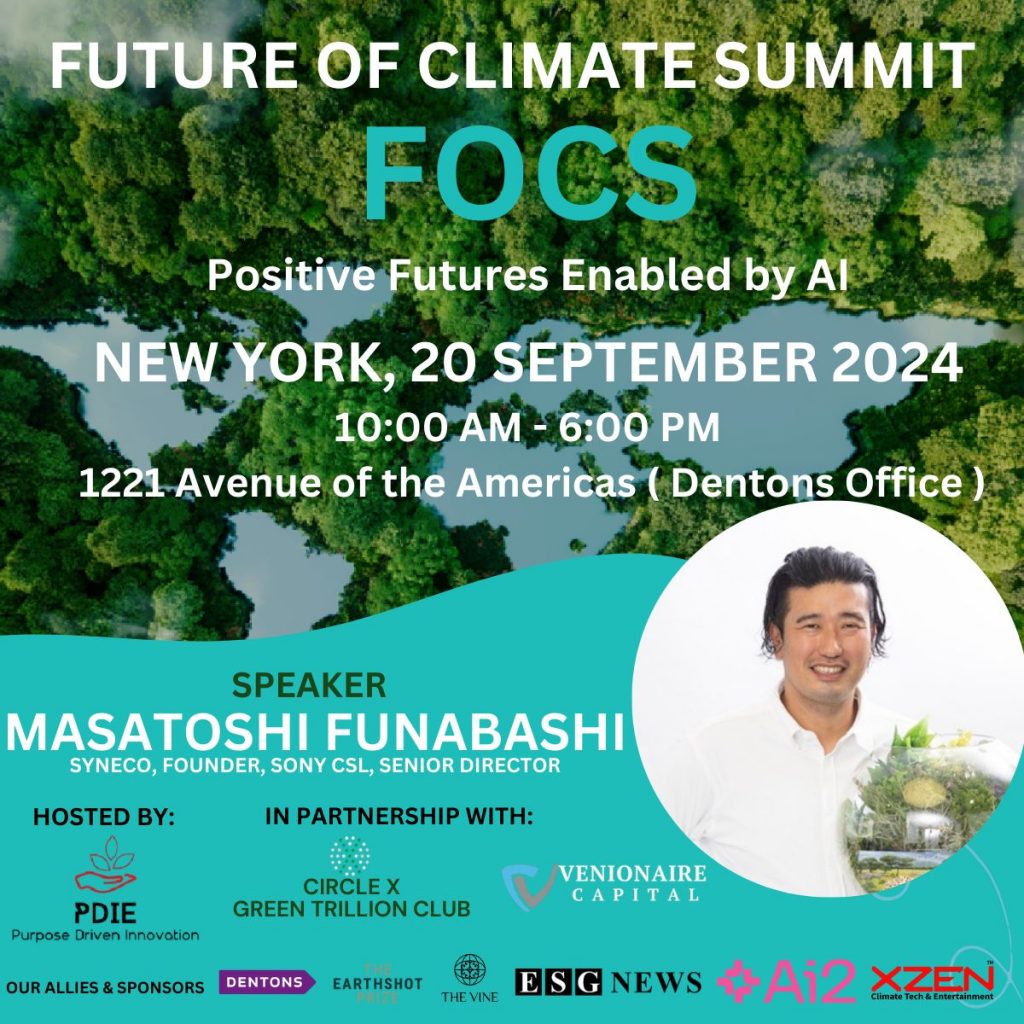
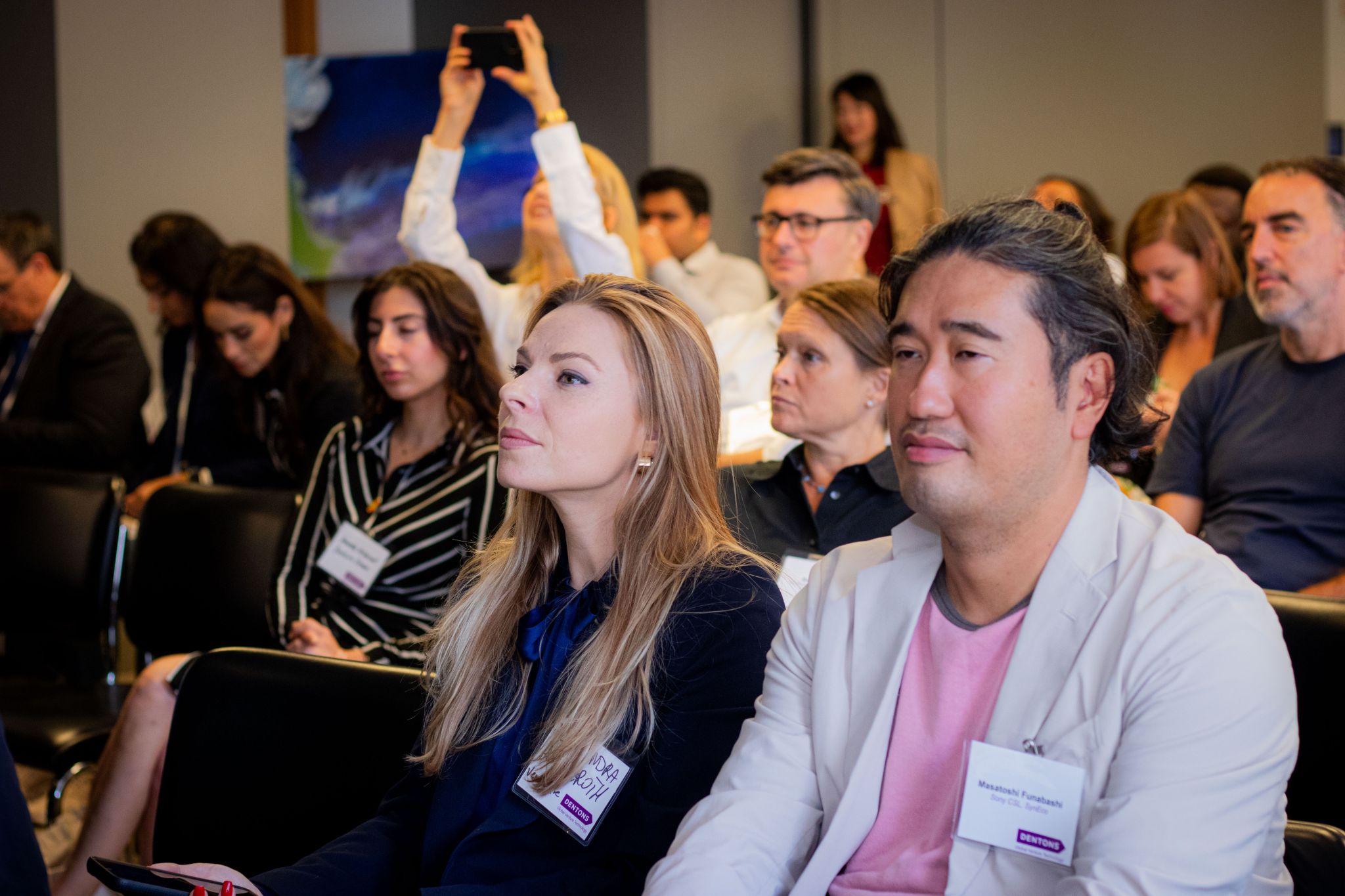
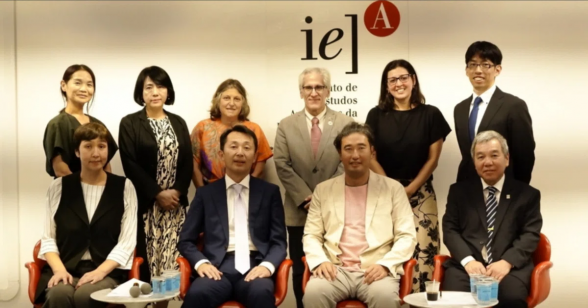
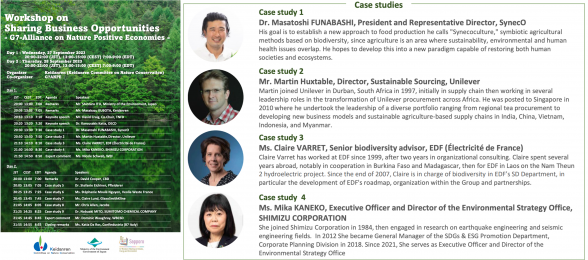
The Future of Climate Summit VOL II was held on September 20, 2024, at Dentons Law Firm in New York Midtown. This event, co-hosted by PDIE Group and Venionaire Capital AG, convened global leaders, innovators, and investors to address critical issues in the climate crisis. With the theme “Positive Futures enabled by AI,” the summit delved into key topics such as energy transition, sustainable cities, biodiversity, and groundbreaking innovations in collaboration with The Earthshot Prize.
Masa Funabashi joined as a featured speaker in the Food & Agriculture session.
Keywords:Degrees of Autonomy and Teleoperation, Machine Learning and Adaptation Abstract: Compared to traditional agricultural environments, the high density and diversity of vegetation layouts in Synecoculture farms present significant challenges in locating and harvesting occluded fruits and pedicels (cutting points). To address this challenge, this study proposes a Mask R-CNN-based method for locating fruits (tomatoes, yellow bell peppers, etc.) and estimating the pedicels from RGBD images acquired by a camera moved along fixed paths. After obtaining masks of all fruits and pedicels, this method judges the matching relationship between the located fruit and pedicel according to the 3D distance between the fruit and pedicel. Subsequently, this research determines the least occluded best viewpoint for harvesting based on the visible real areas of located fruits in images acquired under the fixed paths, and harvesting is then completed from this best viewpoint following a straight path. Experimental results show this method effectively identifies occluded targets and their cutting positions in both Gazebo simulation environments and real-world farms. This method can select the least occluded viewpoint for a high harvesting success rate.
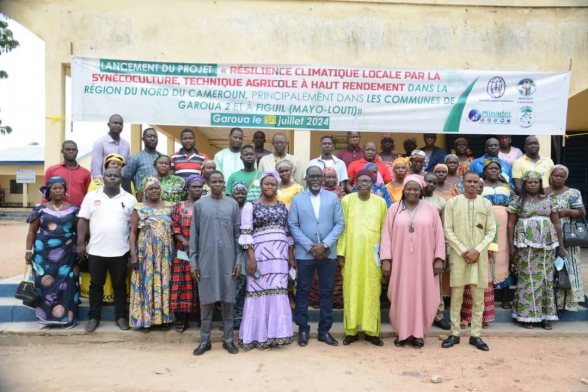
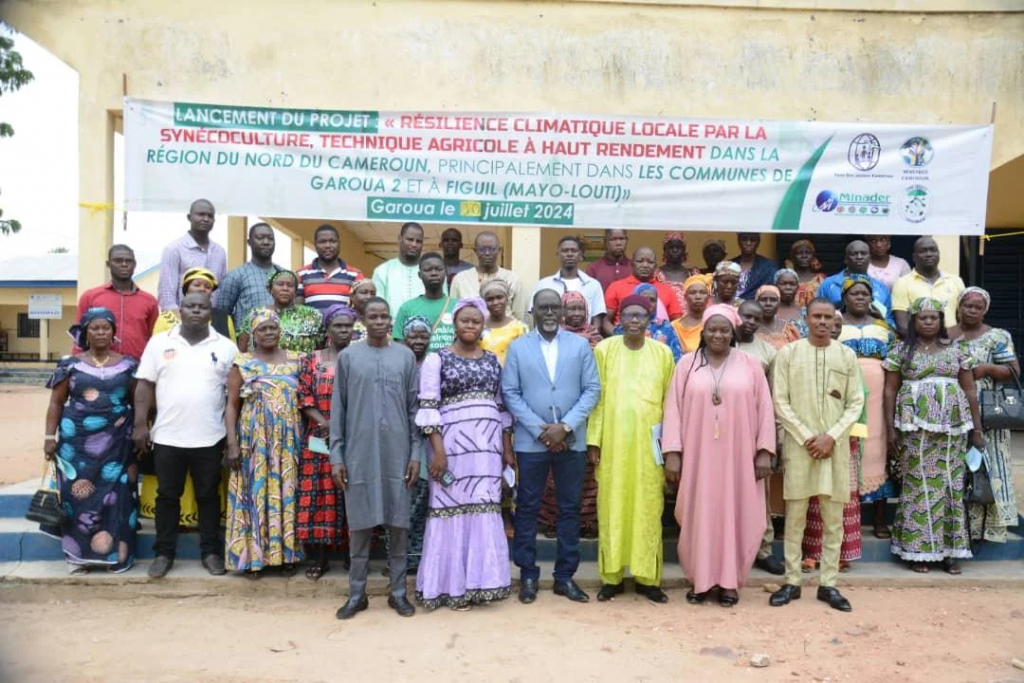
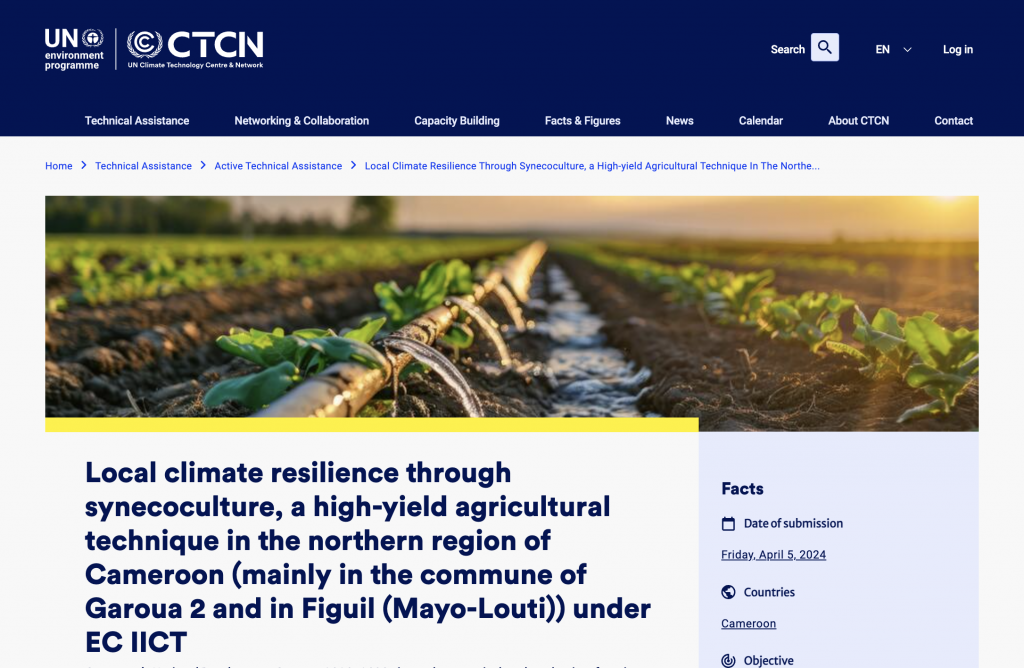
Le projet a été lancé le 3 juillet 2024, en partenariat avec des acteurs techniques tels que le Ministère de l’Environnement, de la Protection de la Nature et du Développement Durable (MINEPDED), le Ministère de l’Agriculture et du Développement Rural (MINADER), ainsi que le Ministère de l’Éducation de Base (MINEDUB), qui intègrera le projet à travers l’introduction de la synécoculture dans les jardins scolaires.
Ce projet formera 500 producteurs agricoles (femmes, hommes, jeunes) aux pratiques synécoculturales, sous l’encadrement du CARFS (Centre Africain de Recherche et de Formation en Synécoculture) répartis équitablement entre 250 à Garoua II et 250 à Figuil. Un comité de pilotage de 8 à 10 membres sera mis en place, comprenant un représentant de la communauté de Garoua II et un autre de Figuil.
Un guide pratique sur l’agriculture synécoculturelle sera élaboré, destiné aux jeunes élèves et comprenant un recensement des bonnes pratiques. Soixante élèves seront sélectionnés pour mettre en œuvre des jardins scolaires dans six établissements, répartis entre 4 jardins utilisant des méthodes agricoles conventionnelles et 2 jardins basés sur des techniques synécoculturelles. Il y aura ainsi trois jardins à Garoua II et trois à Figuil, dont un jardin expérimental en synécoculture dans chaque commune.
Information de base:
Assistance technique : Promotion des techniques de Synécoculture pour renforcer la résilience climatique et améliorer la sécurité alimentaire dans le nord du Cameroun Localisation : Garoua et Figuil, Région Nord, Cameroun Solution : Techniques de Synécoculture pour une agriculture durable Subvention PNUE CTCN : 175 000 USD
Basic Information:
Technical Assistance: Promoting Synecoculture Techniques to Build Climate Resilience and Improve Food Security in Northern Cameroon Location: Garoua and Figuil, North Region, Cameroon Solution: Synecoculture Techniques for Sustainable Agriculture UNEP CTCN grant: USD 175,000
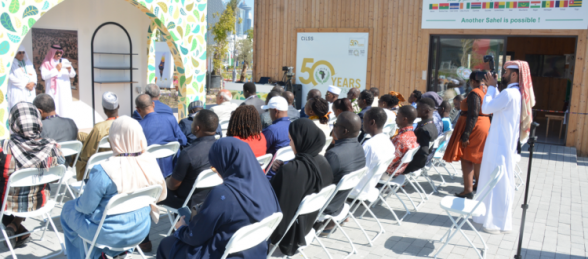
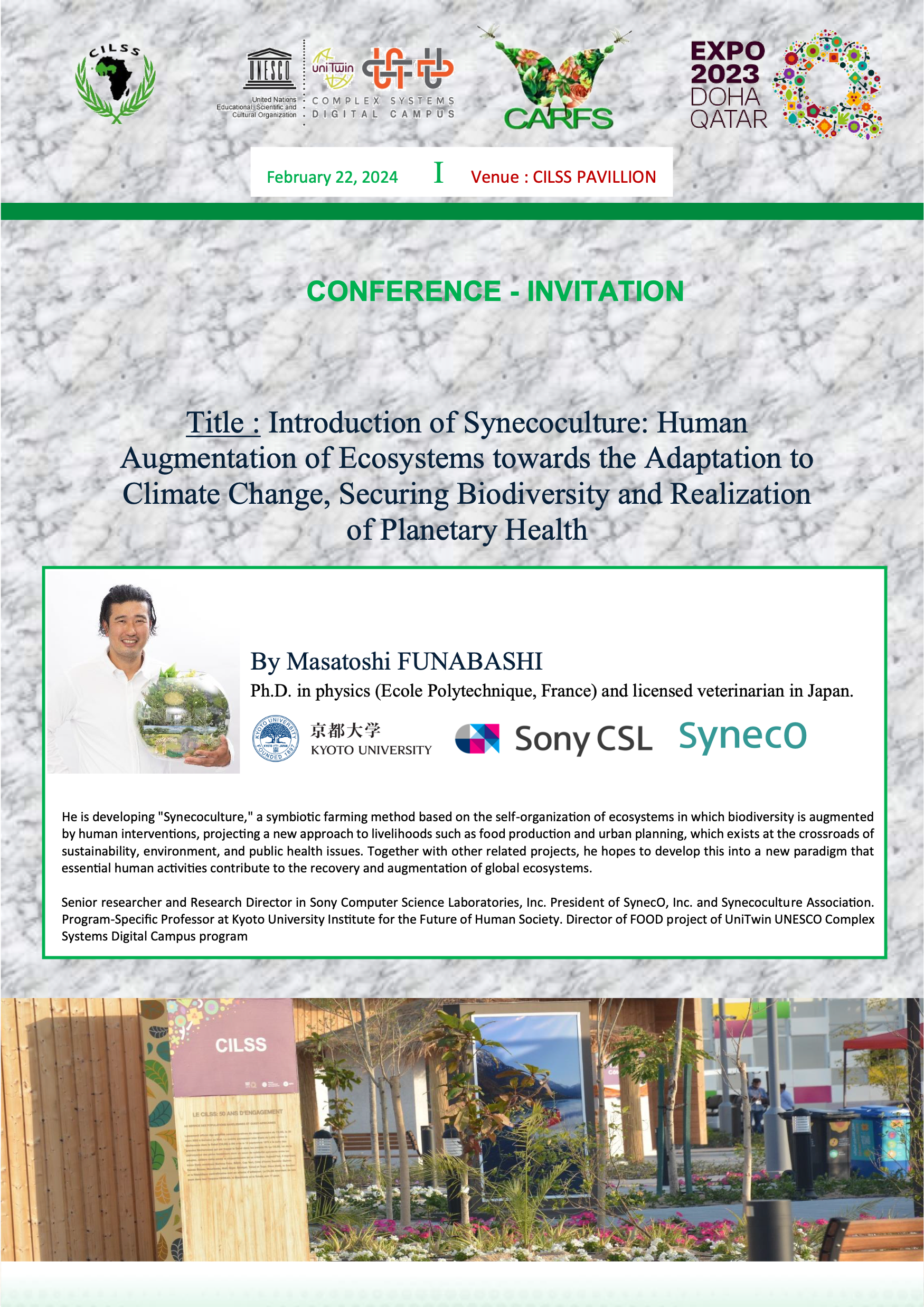
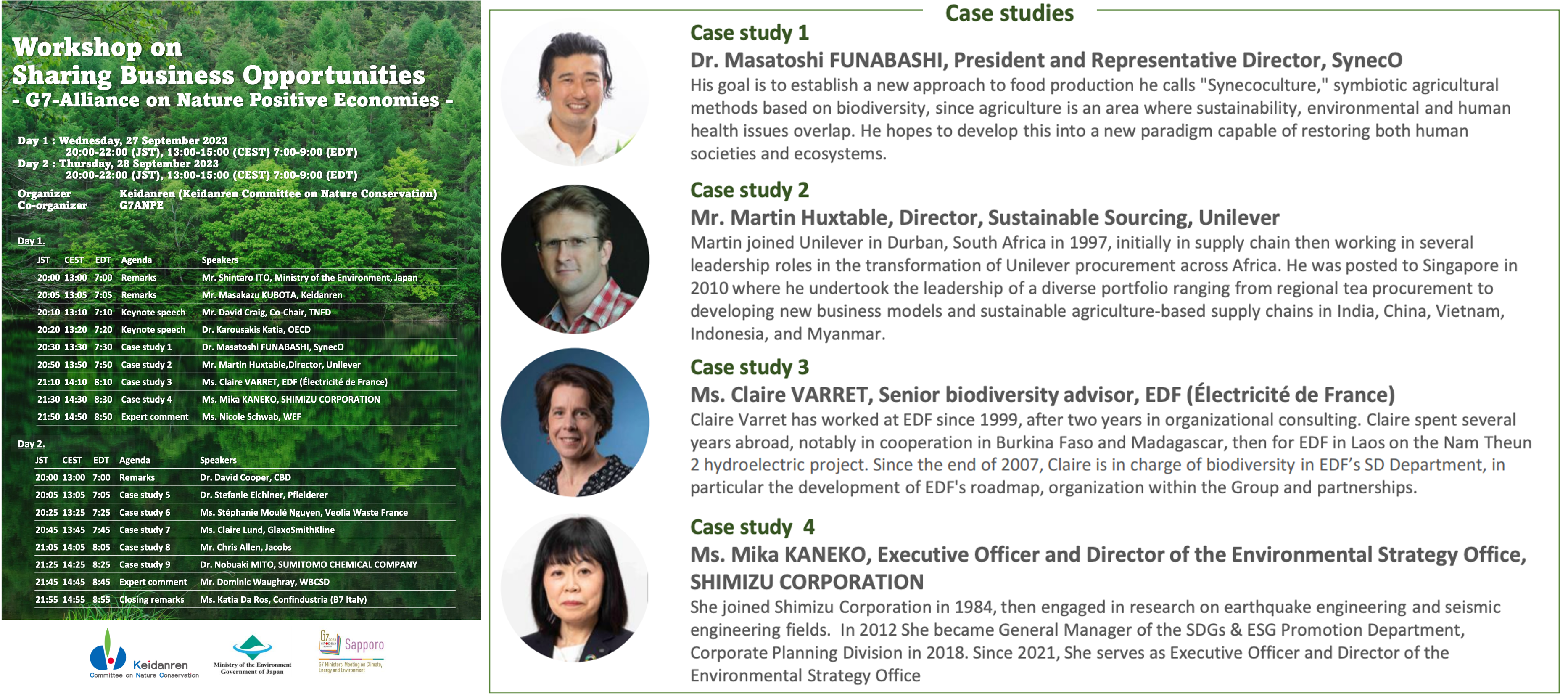
At the 28th Conference of the Parties (COP28) to the United Nations Framework Convention on Climate Change (UNFCCC) being held in Dubai from 30 November to 12 December 2023, Masatoshi Funahashi who is Research Director at Sony CSL and also President of SynecO, Inc., participated in a seminar held in the Japan Pavilion. He spoke about the initiatives of SynecO and on activities related to Synecoculture.
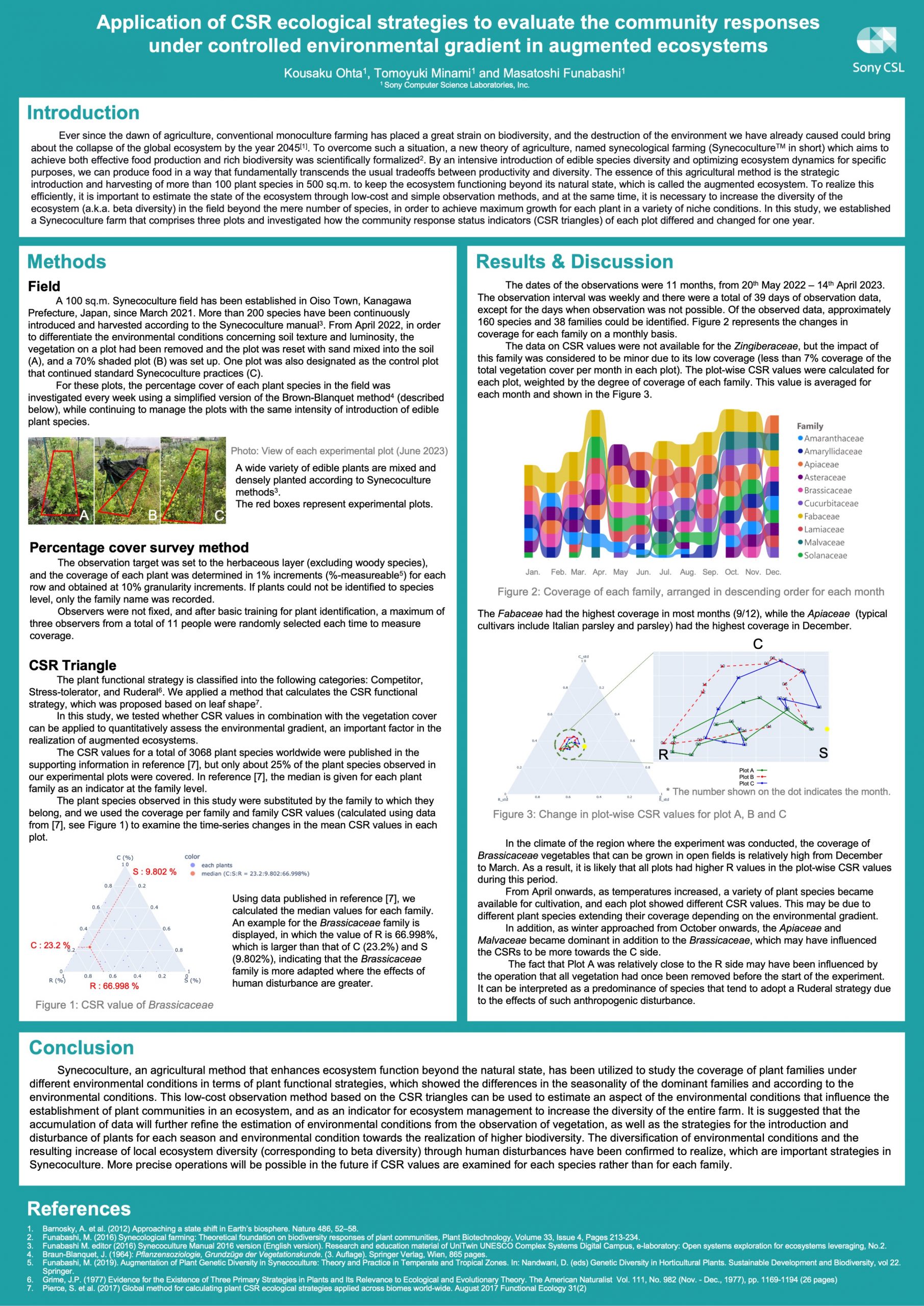
The following presentations were presented at EcoSummit 2023 held in Gold Coast, Australia, on 13-17 June 2023.
-Oral Presentation: Masatoshi Funabashi “Synecoculture experiments: Human Augmentation of Ecosystems.”
-Poster Presentation: Kousaku Ohta, Tomoyuki Minami, and Masatoshi Funabashi “CSR ecological strategies to evaluate the community responses under controlled environmental gradient in augmented ecosystems.”